Luxury dining in Sicily is increasingly defined by access rather than formality. The island’s most memorable culinary experiences are not always found at the most elaborate table. They may begin with a helicopter flight over Mount Etna, continue inside a vineyard planted across ancient lava flows, unfold beneath the stars on Pantelleria or end with a tasting menu on an Aeolian island reached only after crossing the sea.
What makes these experiences exceptional is the connection between food and place.
Sicily is unusually rich in distinctive agricultural territories. Volcanic Etna produces Carricante and Nerello Mascalese at altitude; Pantelleria’s windswept vineyards are shaped by an extraordinary island environment; Salina combines capers, citrus, herbs and fishing traditions; western Sicily moves between vineyards, olive groves and coastal ingredients; and Taormina brings many of these influences together within one of the Mediterranean’s most sophisticated hospitality destinations.
For the luxury traveller, the most compelling culinary itinerary therefore goes beyond booking acclaimed restaurants. It creates encounters with winemakers, chefs and landscapes that would be impossible to reproduce elsewhere.
These are the experiences worth building a journey around.
A Private Helicopter Journey to an Etna Vineyard Turns Dinner into an Arrival
One of Sicily’s most extraordinary culinary experiences begins in the air.
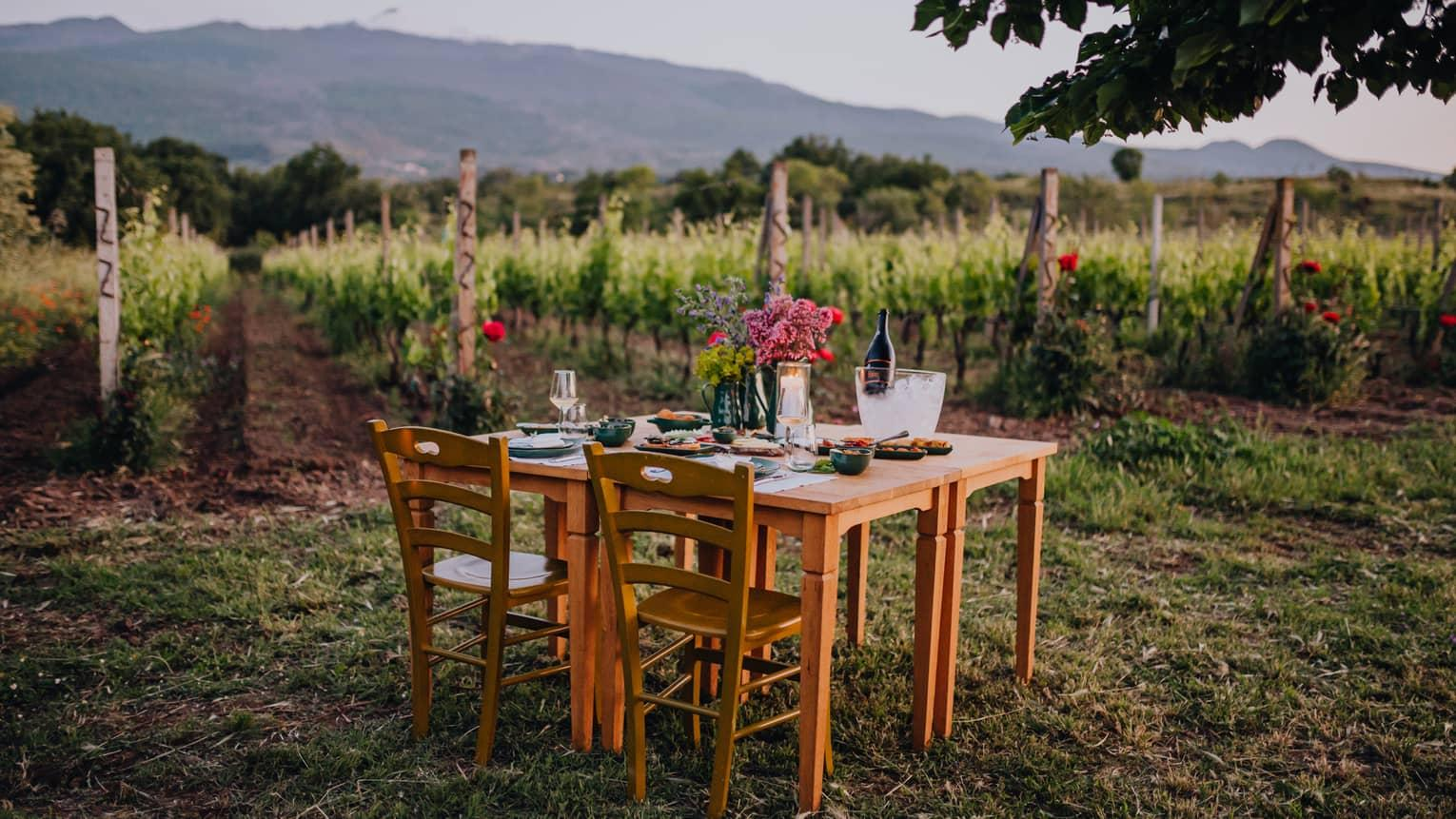
San Domenico Palace, Taormina, A Four Seasons Hotel currently offers a private Mount Etna helicopter experience that departs from the Taormina area and flies over the surrounding landscape before landing at Cottanera, a family-run winery on Etna. Guests are welcomed into the vineyard for a private wine experience, followed by Sicilian sparkling wine at sunset and dinner at the estate. (Four Seasons)
The appeal is not simply the helicopter itself. The journey creates a progression from one of Sicily’s most famous coastal landscapes into a completely different environment shaped by volcanic agriculture.
Etna’s vineyards are distinctive because altitude, exposure and lava-derived soils combine to create numerous highly individual growing zones. Arriving from above makes that topography unusually clear. Terraces, lava fields, villages and vineyard parcels reveal themselves as part of the same volcanic system.
The culinary element becomes more meaningful once guests are on the ground. Wine is no longer tasted abstractly in a hotel bar; it is experienced in the landscape that produced it, with Etna visible around the table.
Four Seasons also offers a dedicated Etna Wine Trail visiting two wineries, giving guests another way to explore local production through meetings with producers and explanations of harvest, bottling and ageing practices. (Four Seasons)
For travellers staying in Taormina, this is one of the clearest examples of how a culinary experience can extend a destination rather than merely accompany it. The day begins with the Ionian coast and ends with volcanic wine country.
Volcanic Sicily: Embracing the Fire and Beauty of Etna and the Aeolian Islands
Planeta’s Vertical Etna Experience Goes Beyond Conventional Wine Tasting
The north side of Mount Etna offers another form of exclusivity, one built less on transportation and more on depth.
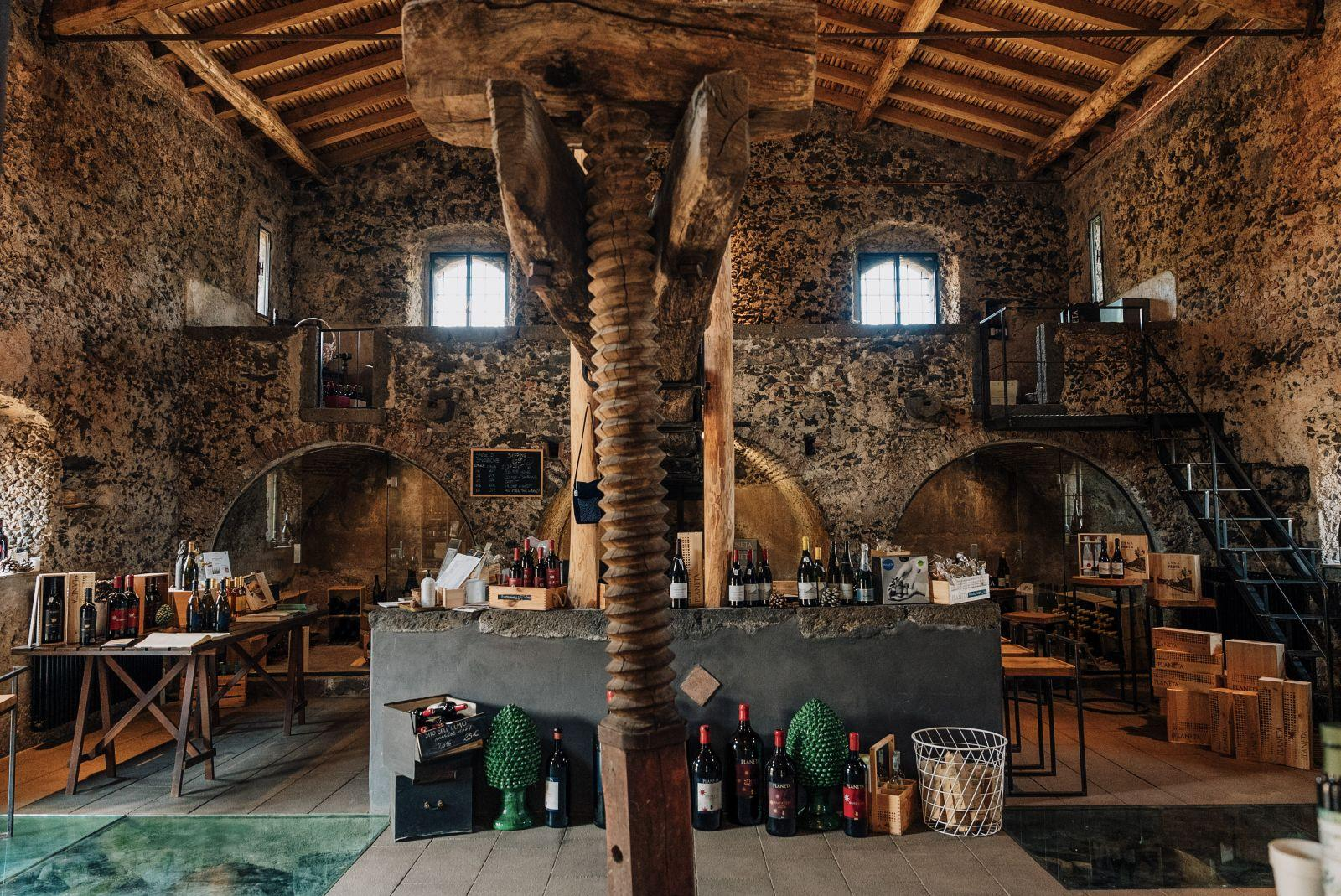
At Planeta’s Sciaranuova estate, located at approximately 850 metres on Etna’s northern slope, vineyards grow among lava flows associated with the long eruption that began in 1614. Native varieties including Carricante, Nerello Mascalese and Nerello Cappuccio are cultivated within a landscape also characterised by oak, chestnut and olive groves. (Planeta)
The estate’s current Vertical Etna experience is designed specifically for travellers who want to understand how Etna wines evolve over time.
Rather than offering a simple sequence of current releases, Planeta presents its Etna crus across three different vintages. The experience also includes a visit to the vineyards and historic palmento, food pairings and a tasting of Planeta olive oils. The current programme is available in two- and three-hour formats. (Planeta)
This is precisely the type of wine experience that justifies using the term exclusive carefully.
The privilege lies not in simply opening an expensive bottle, but in comparing vintages side by side where the wines are produced, while walking through terraces formed by volcanic geology and understanding how time changes the expression of a particular vineyard.
Sciaranuova’s hospitality programme also currently includes experiences devoted to wine, breads and cheeses, cooking, art and landscape, allowing a visit to become considerably more immersive than a standard cellar tour. (Planeta)
For serious wine travellers, the vertical tasting is particularly compelling because it converts Etna from a scenic wine region into something more precise. Differences between years, vineyard conditions and maturation become part of the experience.
It is a form of luxury built around knowledge.
Pantelleria Offers One of Sicily’s Most Distinctive Wine Experiences Under the Stars
Pantelleria is technically part of Sicily, yet reaching it feels like travelling into another Mediterranean.
The volcanic island lies between Sicily and North Africa and has developed a viticultural culture adapted to strong winds, heat and limited rainfall. The traditional training of Zibibbo vines in low bush form—the vite ad alberello—belongs to a practice recognised by UNESCO as intangible cultural heritage.
Donnafugata’s estate at Khamma places visitors directly inside this landscape. The winery is surrounded by Zibibbo vineyards and includes the Giardino Pantesco, a historic stone-walled garden now associated with FAI. Donnafugata’s current hospitality programme on the island operates during the summer season. (visit.donnafugata.it)
Among the winery’s experiences is Ben Ryé sotto le stelle, an evening gourmet tasting dedicated to Pantelleria and the estate’s celebrated passito wine. Donnafugata also offers a vertical tasting of Ben Ryé, allowing different vintages to be compared in the island environment where the wine originates. (visit.donnafugata.it)
Pantelleria makes the experience exceptional because the wine cannot be separated from the effort required to produce it.
Low-trained vines, dry-stone walls, volcanic soils and intense exposure are not decorative features surrounding the tasting; they are part of the explanation for what is in the glass.
For a luxury traveller, this is why Pantelleria should be approached with time. Flying or sailing to the island solely for one tasting would miss the point. Several nights allow the culinary experience to sit naturally alongside swimming, volcanic landscapes, caper cultivation and slow evenings far removed from Sicily’s major resort towns.
The island demonstrates a recurring principle of Sicilian gastronomy: the more specific the territory, the more meaningful the food and wine become.
Salina Turns a Michelin-Starred Tasting Menu into an Expression of the Island
Salina offers the same sense of geographic specificity through cuisine rather than wine alone.
At Hotel Signum in Malfa, chef Martina Caruso leads a restaurant whose identity is closely tied to the Aeolian island. For the 2026 season, Signum confirms both its Michelin star and Michelin Green Star and presents three principal tasting itineraries: Sigillo, combining land and sea; Oltremare, focused on fish; and Radici, a plant-based menu built around local vegetables, herbs and citrus. (Scent of Salina)

The sophistication comes from restraint.
Salina is not treated merely as a backdrop for haute cuisine. Caruso’s cooking draws directly from the island’s produce, seasons and culinary memory. Signum describes the experience through ingredients such as local fish, vegetables, herbs, citrus and other elements linked to Aeolian agriculture. (Scent of Salina)
The restaurant’s terraces add another layer. One looks towards Panarea and Stromboli, meaning the wider Aeolian archipelago remains physically present during the meal. (Hotel Signum – Charming Aeolian Hotel)
For travellers, the most exclusive version of the experience is not necessarily a special table or an additional course. It is staying on Salina long enough for the tasting menu to become part of several days on the island.
A morning boat journey, a swim, an afternoon among villages and vineyards, aperitivo at sunset and a long tasting menu create a sequence that would lose much of its power if Signum were experienced as a quick excursion.
This is destination dining in its most convincing form: the journey to the restaurant is inseparable from the restaurant itself.
Private Dining at San Domenico Palace Creates a Bespoke Sicilian Table
Not every exclusive culinary experience needs to involve travelling into remote countryside.
In Taormina, exclusivity can also come from privacy and personalisation.
San Domenico Palace currently offers private dining experiences with bespoke menus created by Executive Chef Massimo Mantarro and his culinary team. The hotel’s Sala Teatro can be reserved privately, while Four Seasons also confirms access to outdoor event spaces and tailored culinary arrangements overlooking the Taormina landscape. (Four Seasons)
The experience differs significantly from a standard restaurant reservation.
Mantarro also leads the Michelin-starred Principe Cerami, where contemporary Sicilian cuisine is paired with a cellar containing more than 1,000 labels. The restaurant retained one Michelin star in the 2026 Guide. (Four Seasons)
But private dining allows a meal to be shaped around a particular occasion rather than an established restaurant format.
For anniversaries, family celebrations or small groups travelling together, this becomes especially compelling. Menu design, setting and service can be adapted while the historic former convent and views over Taormina Bay provide a sense of place that cannot easily be recreated elsewhere.
The hotel also offers culinary activities including pasta, pizza and tiramisù masterclasses, alongside Etna wine experiences. (Four Seasons)
The strongest luxury itinerary combines these rather than choosing only one. Guests can experience Michelin-starred dining one evening, explore Etna wine country the following day and reserve a private meal for a special final night.
Sicilian Restaurants Worth Travelling For
Donnafugata’s Multi-Territory Tastings Turn Sicily into a Wine Journey
A single winery can explain one territory. Donnafugata’s broader hospitality programme demonstrates how radically Sicilian wine changes across several of them.
The producer currently welcomes visitors in Marsala, Contessa Entellina, Pantelleria, Etna and Vittoria, with professional tastings and wine-and-food pairings designed around their individual landscapes. (visit.donnafugata.it)
This creates the possibility of building an entire Sicilian journey around wine rather than treating tastings as occasional additions.
At Contessa Entellina, the Donna Angelica experience includes a guided estate visit followed by five wines from Donnafugata’s various territories paired with five culinary specialties. (visit.donnafugata.it)
In Marsala, current programmes range from tastings of iconic wines to wine-and-food experiences and interpretations of Sicilian culinary traditions. On Etna, volcanic wines dominate the narrative; on Pantelleria, Zibibbo and passito become central; in Vittoria, the wine culture shifts again towards the southeastern landscape. (visit.donnafugata.it)
The luxury here is intellectual as much as sensory.
Travellers begin to understand Sicily not as one wine region but as a collection of radically different terroirs. The distance between Etna and Pantelleria is expressed not only on a map but through acidity, structure, grape variety and agricultural practice.
For a longer culinary itinerary, that diversity can become the organising principle of the trip.
Sicily’s Most Exclusive Culinary Experiences Are Defined by Access to Place
What distinguishes Sicily from many established fine-dining destinations is that culinary luxury here often becomes more interesting the farther the traveller moves beyond the dining room.
A helicopter dinner on Etna matters because the journey reveals the volcano. A vertical tasting at Sciaranuova matters because the wines are compared in the vineyard that produced them. Ben Ryé becomes more meaningful after seeing the windswept vines of Pantelleria. Signum’s tasting menu acquires depth after spending a day on Salina. Private dining in Taormina works because the architecture and coastline contribute as strongly as the table itself.
This should shape the way a culinary journey is planned.
Rather than trying to reserve a prestigious dinner every night, travellers should alternate between immersion and refinement. One day might centre on a winery and lunch; another on a market or local producer; another on a Michelin-starred tasting menu. The objective is not to accumulate luxury experiences but to understand why each belongs where it is.
Planeta expresses this idea particularly clearly through its current hospitality model, which connects wineries in Menfi, Noto, Vittoria, Etna and Capo Milazzo with cooking, culture and nature rather than limiting visits to wine production alone. (Planeta)
A high-end culinary itinerary should therefore leave room for context.
Etna deserves at least a full day. Salina deserves several nights. Pantelleria needs enough time for the island itself to be understood. Taormina benefits from combining the sea with the volcano. Western Sicily becomes richer when Marsala wine is experienced alongside the agricultural landscape around it.
Sicily: A Luxury Travel Guide to the Mediterranean’s Most Captivating Island
Ultimately, Sicily’s greatest culinary privilege is not access to something hidden behind a velvet rope.
It is access to provenance.
The vineyard can be walked before the wine is poured. The island can be crossed before its ingredients appear on the plate. The volcano can be seen before its influence is tasted.
That relationship between landscape and flavour is what makes Sicily’s finest culinary experiences worth travelling for.
Frequently Asked Questions
What are the most exclusive culinary experiences in Sicily?
Among the strongest current experiences are private Etna wine journeys, the helicopter-and-dinner experience offered through San Domenico Palace, Planeta’s Vertical Etna tasting, Donnafugata’s Pantelleria wine experiences, Michelin-starred dining at Signum on Salina and bespoke private dining in Taormina. (Four Seasons)
Which part of Sicily is best for luxury wine experiences?
Mount Etna is particularly strong for travellers seeking high-altitude volcanic viticulture and sophisticated winery visits. Western Sicily around Marsala and Contessa Entellina offers a different wine tradition, while Pantelleria provides one of the island’s most distinctive viticultural landscapes.
Can private culinary experiences be arranged in Taormina?
Yes. San Domenico Palace currently offers private dining, tailored menus, wine experiences and culinary masterclasses, alongside excursions into Etna wine country. (Four Seasons)
Which Sicilian island is best for a luxury food and wine trip?
Salina is particularly strong for gastronomy because of Signum and its local food culture, while Pantelleria is exceptional for wine, especially Zibibbo and passito traditions. The two islands offer very different experiences and work best as dedicated stays rather than short day trips.
How far in advance should exclusive culinary experiences in Sicily be booked?
Advance booking is advisable, particularly for private experiences, Michelin-starred restaurants, seasonal island programmes and experiences requiring transport such as helicopter transfers. Availability can vary substantially according to season, so direct confirmation with the operator should be part of itinerary planning.
By Luxury Magazine Editorial Team