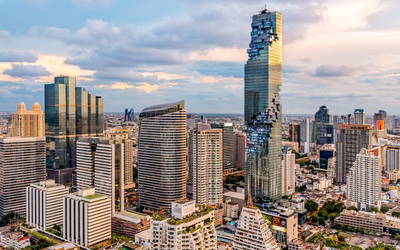
Bangkok is a city shaped by water. Long before modern roads and elevated railways transformed its landscape, rivers and canals connected homes, temples, markets and trading communities. Boats carried people and goods through the capital, while life unfolded along the banks in wooden houses, gardens and small riverside settlements.
Today, the Chao Phraya River remains one of Bangkok’s defining features. Yet some of the most interesting journeys begin when a boat leaves the main river and enters the narrower canals, known locally as khlong. Here, the pace changes. Traditional houses stand close to the water, temple roofs appear between trees, and residents go about their daily routines along the banks.
The historic waterways of Thonburi, on the western side of the river, offer one of the clearest views of this older Bangkok. A canal journey reveals a different side of the capital, shaped by community life, religious traditions and a close relationship with the water.
Thonburi: Bangkok’s Historic Waterway District

Thonburi lies on the western bank of the Chao Phraya River, opposite Bangkok’s historic royal district. It served as the Siamese capital from 1767 to 1782, under King Taksin, before the capital moved across the river to what is now Rattanakosin. Although the city has expanded far beyond its historic centre, Thonburi still contains waterways and residential areas that preserve traces of Bangkok’s earlier landscape.
The district’s canals once played a central role in everyday life. Residents travelled by boat, traders moved goods between communities, and houses often faced the water rather than a road. As Bangkok developed, many canals lost their importance as transport routes. Some were filled in or incorporated into the road network, while others continued to serve the neighbourhoods around them.
Two waterways are particularly relevant to visitors: Khlong Bangkok Noi and Khlong Bangkok Yai. Both are linked to earlier bends in the Chao Phraya River that became canals after a shortcut altered the river’s course. Their banks contain temples, wooden homes, local piers and small gardens, creating a landscape that differs sharply from central Bangkok’s commercial districts.
A long-tail boat is one of the best ways to explore these canals. The narrow vessel can travel beyond the main river into smaller waterways, allowing passengers to see parts of the district that are difficult to appreciate from the road. Most private trips last around one or two hours, although longer journeys can include temples, museums or a canal-side market.
The attraction is not simply the scenery. It is the chance to see Bangkok as a living water city, where old traditions and contemporary urban life continue side by side.
Khlong Bangkok Yai and Khlong Bang Luang

Khlong Bangkok Yai is one of the main waterways running through Thonburi. It passes temples, residential districts and local trading areas before connecting with smaller canals. Along the route, the view changes between concrete embankments, wooden houses, gardens and religious buildings close to the water.
One of the most interesting areas is Khlong Bang Luang, associated with a traditional canal-side community and the well-known Artist’s House, or Baan Silapin. The building is an old wooden house on stilts that has been adapted into a gallery, small shop and cultural space. It offers a glimpse of how historic buildings can continue to serve a community while attracting visitors interested in local art.
The surrounding lanes are worth exploring on foot. Narrow walkways pass homes, small businesses and waterside terraces. The atmosphere is generally quieter than the main tourist districts, although the area remains part of a working residential neighbourhood. A stop here can turn a simple boat ride into a more complete cultural visit.
The Artist’s House is also known for traditional Thai puppet performances. Recent local visitor information has listed shows at around 2 pm on most days except Wednesday, but schedules can change. Check locally before planning the journey around a performance. Entry and donations may also depend on current arrangements.
Further along Khlong Bangkok Yai, Wat Paknam Phasi Charoen is another notable landmark. The temple complex is known for its large seated Buddha and the white Maha Chedi Maharatchamongkhon, whose upper level contains a green glass stupa beneath a painted ceiling. The temple remains an active religious site, so visitors should dress modestly and keep their voices low inside its sacred spaces.
When arranging a boat trip, ask whether the route can include Khlong Bang Luang or Wat Paknam. Not every short tour covers both, and travel time depends on the starting pier and the chosen route. Confirm the itinerary before departure rather than assuming that every canal tour includes the same stops.
Khlong Bangkok Noi: Temples, Heritage and Riverside Homes

North of Khlong Bangkok Yai, Khlong Bangkok Noi provides another perspective on Thonburi’s history. The canal runs past religious sites, residential communities and the National Museum of Royal Barges, which preserves the elaborately decorated vessels used in royal river processions.
The Royal Barges Museum offers a closer look at the craftsmanship behind Thailand’s ceremonial boats. Their carved forms, decorative details and elaborate prows reflect the importance of river travel in royal ceremonies. Visitors interested in traditional design can combine a museum visit with a canal journey, although the stop should be arranged in advance if travelling by private boat.
Temples along Khlong Bangkok Noi also reflect the importance of religion in the area’s community life. Wat Suwannaram and Wat Si Sudaram are among the historic sites associated with the waterway. Their surroundings provide a quieter contrast to Bangkok’s best-known temple complexes, where visitor numbers can be high.
The canal itself is part of the experience. From the boat, passengers may see wooden houses raised above the water, small private piers, plants arranged along balconies and boats tied beside family homes. These details show how the waterway remains part of the neighbourhood’s physical layout, even as modern roads and transport systems have changed daily routines.
Visitors should remember that the banks are not a theatrical setting created for tourists. People live and work here, and some homes sit only a short distance from passing boats. Photographing a temple or a landscape is different from taking close-up pictures of residents. A discreet approach helps preserve the everyday character that makes the journey worthwhile.
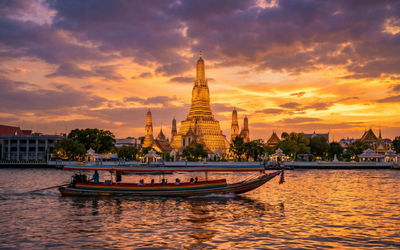
A trip along Khlong Bangkok Noi can also be combined with a visit to the riverfront around Wat Arun or other historic landmarks. The exact route depends on the boat operator, so allow enough time and confirm any museum visits separately.
Everyday Life Along Bangkok’s Canals
A canal journey reveals a side of Bangkok that is easy to miss when travelling only by road. The details are often small: a family tending plants on a wooden terrace, a narrow landing beside a home, a temple wall reflected in the water or a local boat carrying supplies between neighbourhoods.
These scenes reflect a long relationship between the city and its waterways. Bangkok’s canal network once supported transport, commerce and household activities on a much larger scale. Although many functions have shifted to roads, the surviving khlongs continue to connect residential areas and form part of the city’s cultural landscape.
The waterways are not uniform. Some sections feel open and green, with gardens and houses set back from the bank. Others pass close to dense residential buildings, small workshops or concrete embankments. This variety is part of the reality of urban Bangkok: historic structures, modern development and practical infrastructure occupy the same landscape.
For visitors, a slower pace makes these differences easier to notice. Instead of treating the journey as a quick transfer between attractions, take time to observe the architecture, the shape of the canal and the way people use the space around it. A knowledgeable local guide can add context about the history of a neighbourhood, its religious sites and changes in the use of the waterways.
The best tours also respect the environment. Avoid throwing anything into the water, follow the operator’s instructions and choose a responsible provider that does not encourage intrusive photography or unnecessary disturbance to residents. Water quality and waste management remain important urban issues, and the canals should not be viewed as untouched natural scenery.
A journey through Thonburi is most rewarding when it offers a genuine look at the city rather than a staged version of the past.
Floating Markets and Food by the Water

Markets add another dimension to Bangkok’s canal culture. Some are major visitor destinations, while others primarily serve local communities. They provide opportunities to sample Thai dishes, buy fresh produce and observe the connection between food, trade and life beside the water.
Taling Chan Floating Market is one option for a weekend visit. Located beside Khlong Chak Phra, it is known for prepared food and dining areas near the canal. Khlong Lat Mayom Floating Market, further west, offers another local-market experience, with food stalls and short boat trips in the surrounding waterways. Both are generally associated with weekend trading, but opening days and activities should be checked before travelling.
These markets are not identical to the historic floating markets often shown in photographs from earlier periods. Today, many combine land-based stalls with food served beside the water and selected boat activities. Their appeal lies in the mix of traditional dishes, casual dining and community atmosphere rather than a guarantee that every transaction takes place from a boat.
Visitors can look for noodle dishes, grilled seafood, fresh fruit, Thai desserts and regional snacks. Choosing freshly prepared food and stalls with a steady flow of customers is a sensible approach in the tropical climate. Carry cash in Thai baht, as some small vendors may not accept cards.
A market visit can work well after a morning canal trip, particularly if the route is planned around the market’s opening hours. However, not every private boat tour includes a floating market, and some destinations require additional travel by road. Confirm the plan before departure.
For travellers who prefer a quieter experience, a small meal beside a canal can be just as memorable as a busy market. The setting, the food and the chance to observe local routines often matter more than the number of dishes sampled.
Planning a Bangkok Canal Boat Tour
A little preparation can make a canal journey more comfortable and rewarding. Private long-tail boats can be hired from riverside piers, with routes and durations arranged directly with the operator. Common departure points on the central Bangkok side include piers near Tha Chang and Tha Tien, although available services and prices vary.
Before boarding, agree on the total price, the length of the trip, the route and any planned stops. Ask whether the fare covers the whole boat or is charged per person, and clarify whether waiting time at temples or markets is included. There is no single fixed price for every private canal tour, as the cost depends on the departure point, duration and itinerary. Avoid relying on a price quoted for a different route.
Early morning and late afternoon are often more comfortable than the middle of the day. An open boat offers little protection from direct sunlight, so bring water, a hat and sunscreen. During or after heavy rain, water levels and local conditions may affect some routes. Ask the operator about delays or restrictions before setting out.
Wear clothing suitable for warm weather and keep valuables secure. If the boat does not provide shade or life jackets, ask about these before departure, particularly when travelling with children. The engine can be loud, so a canal journey may not be ideal for anyone who is sensitive to noise.
A one- or two-hour ride is a good introduction, while a longer half-day itinerary allows time for cultural stops. For a balanced experience, combine one canal route with a temple or local market rather than trying to cover every waterway in a single outing.
Bangkok’s canals are not relics of a vanished city. They remain part of a changing urban landscape, connecting homes, places of worship and local businesses. Travelling along them offers a different understanding of the capital: one measured not by skyscrapers or traffic, but by the quiet details of life along the water.
Frequently Asked Questions
Where is the best place to take a canal boat tour in Bangkok?
Thonburi is one of the best areas for exploring historic canals. Routes along Khlong Bangkok Yai, Khlong Bang Luang and Khlong Bangkok Noi offer views of traditional houses, temples and riverside communities.
How long does a Bangkok canal boat tour take?
Many private long-tail boat trips last around one or two hours. A half-day visit allows more time for stops such as the Artist’s House, a temple or a floating market. The duration depends on the departure point and agreed route.
Can visitors see traditional Thai houses along the canals?
Yes. Several Thonburi waterways pass wooden houses, homes raised on stilts, small private piers and gardens beside the water. These are lived-in residential areas, so visitors should respect residents’ privacy and avoid intrusive photography.
Which floating markets can be visited near Thonburi?
Taling Chan and Khlong Lat Mayom are two options commonly associated with weekend visits. They offer prepared food, local products and opportunities to eat beside the water. Check current opening arrangements before travelling.
What should visitors know before hiring a long-tail boat?
Agree on the price, duration, route and any stops before boarding. Bring drinking water, sun protection and cash, and ask about life jackets and shade. Conditions can change after heavy rain, so confirm that the planned route is operating.
By The Editors of Luxury Magazine