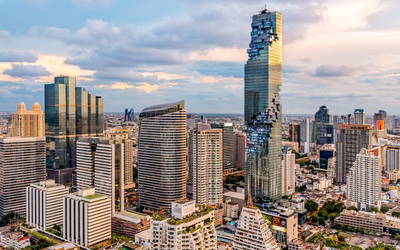
Bangkok’s creative energy is visible far beyond its museums and major cultural institutions. In old warehouses, former trading buildings and narrow streets, artists, designers and independent businesses are finding new ways to use the city’s historic spaces. Traditional architecture sits alongside contemporary galleries, experimental exhibitions and cafés that have become part of local creative life.
At the centre of this transformation is Charoen Krung, one of Bangkok’s oldest roads and a key part of its emerging creative identity. The surrounding Bang Rak district brings together art spaces, design studios, historic shophouses and riverside heritage. Nearby Talat Noi adds another layer, with its old workshops, street art and small creative businesses.
These neighbourhoods offer a different perspective on the Thai capital. Rather than presenting culture as something confined to formal institutions, they reveal how art and design can become part of everyday urban life. Exploring them on foot allows visitors to discover the buildings, people and independent spaces shaping contemporary Bangkok.

Charoen Krung: Bangkok’s Historic Road Becomes a Creative District
Charoen Krung opened in 1864 and is widely recognised as Bangkok’s first modern paved road. Developed during a period of expanding international trade, it became an important route for merchants, businesses and foreign communities. Historic commercial buildings and religious landmarks still reflect this cosmopolitan past.
In recent years, parts of Charoen Krung have developed into a centre for contemporary art, design and creative enterprise. Old commercial properties have found new uses as galleries, studios, cafés and cultural venues. This evolution has helped bring renewed activity to the district while preserving elements of its architectural heritage.
The Thailand Creative and Design Center (TCDC) has played an important role in this development. Its Bangkok headquarters occupies the former Grand Postal Building at 1160 Charoen Krung Road, a distinctive landmark dating from 1940. The centre supports creative learning through exhibitions, design resources, research facilities and professional activities. Its presence has helped strengthen the area’s role as a meeting point for designers, entrepreneurs and people working in the creative industries.
The district is best explored slowly. A walk along Charoen Krung reveals old façades, independent shops, street murals and small businesses operating alongside newer cultural spaces. Not every building is open to the public, and individual galleries may change exhibitions or opening schedules. Checking ahead is useful if you have a particular venue in mind.
Charoen Krung’s appeal lies in this mixture of past and present. It is not a purpose-built cultural quarter separated from the rest of the city. It remains a working urban district where heritage, commerce and creative activity overlap.
Warehouse 30: Contemporary Art in Historic Industrial Spaces

Warehouse 30 is one of the most recognisable creative destinations in Charoen Krung. The complex occupies restored warehouses dating from the Second World War era and has been adapted for contemporary cultural and commercial uses. Its spaces bring together art, design, independent retail and places to eat or take a break.
The industrial architecture is part of the experience. Rather than replacing the original character with a conventional shopping complex, the development retains the warehouse setting and uses it to frame a changing mix of creative businesses. Visitors may encounter an exhibition, browse design objects or discover a small shop that would be easy to miss on a main shopping street.
Warehouse 30 is particularly useful for travellers who want to explore Bangkok’s creative scene without committing to a full day in a large museum. The different spaces allow for a flexible visit, and the surrounding neighbourhood offers further opportunities to continue on foot.
However, the experience can vary. Some businesses operate independently, and not every space will necessarily have an exhibition or event on the day of your visit. Treat the complex as a place to explore rather than assuming every gallery will be open.
It is also worth looking beyond the individual venues. The reuse of old warehouses reflects a wider question facing Bangkok: how can historic buildings remain relevant as the city grows? Creative businesses can bring new audiences and economic activity into older districts, while the existing architecture gives these businesses a distinctive setting.
For visitors interested in design, urban renewal and contemporary culture, Warehouse 30 offers a practical introduction to these ideas in one location.
Galleries and Contemporary Art Along the River
Charoen Krung and the surrounding riverside area contain several spaces that help visitors understand Bangkok’s contemporary art scene. Some present established artists, while others focus on emerging practices, experimental work or exhibitions that connect art with design and everyday life.
River City Bangkok, located beside the Chao Phraya River, is one of the area’s best-known art and cultural destinations. It hosts exhibitions and art-related events alongside shops and other visitor facilities. Its riverside position also makes it a convenient stop for travellers exploring the historic districts around Bang Rak and Talat Noi.
For a broader view of Thai contemporary art, the Bangkok Art and Culture Centre (BACC) is another important destination, although it is located in the Siam area rather than Charoen Krung. The centre presents temporary exhibitions across several floors and supports activities spanning visual art, performance, education and cultural exchange. Admission to exhibitions is generally free, except for certain special events.
BACC is open Tuesday to Sunday, from 10:00 to 20:00, and is directly connected to BTS National Stadium station. This makes it easy to combine with other central Bangkok attractions. Check the exhibition programme before visiting, as individual galleries may close temporarily between shows.
These spaces offer different experiences. River City is convenient for visitors exploring the riverfront and historic districts, while BACC provides a broader overview of contemporary art and cultural activity. Visiting both can reveal the range of approaches found in Bangkok, from commercial gallery spaces to a public cultural centre.
The most rewarding approach is to follow your interests rather than try to see every exhibition. Photography, painting, installation art and design may all feature in different programmes, but their availability changes throughout the year.
Talat Noi: Street Art, Workshops and Creative Reinvention

Close to Charoen Krung, Talat Noi offers a more informal creative atmosphere. Its historic lanes contain old houses, mechanical workshops, Chinese shrines and buildings connected to the area’s trading past. In recent years, street art, cafés and independent creative businesses have added new reasons to explore the neighbourhood.
The contrast between old and new is central to Talat Noi’s identity. Murals appear on weathered walls, while small businesses continue to operate from traditional shopfronts. A short walk can move from a busy repair workshop to a quiet courtyard or a contemporary café inside a restored building.
Street art is an important part of the area’s visual character, but it should not be treated as a fixed outdoor collection. Murals can fade, be repainted or disappear as buildings change. The pleasure lies in exploring the streets and noticing how creative work interacts with the existing architecture.
Talat Noi also rewards visitors who look beyond the most photographed corners. Traditional houses, small shrines and workshop entrances reveal details of local life that are easy to overlook. If you stop for a drink or a meal, independent cafés and small food businesses provide an opportunity to support the neighbourhood’s economy.
Because Talat Noi remains a residential and working district, visitors should be considerate. Ask before photographing people, avoid blocking narrow lanes and do not enter private courtyards without permission. These simple habits help ensure that the neighbourhood remains a place for its residents as well as a destination for visitors.
Talat Noi and Charoen Krung work well together in a single walking itinerary. One offers a concentration of galleries and creative venues; the other reveals a more informal relationship between heritage, street art and everyday urban life.
Design, Craft and Bangkok’s Independent Creative Businesses
Bangkok’s design culture extends beyond art exhibitions. Across its creative districts, independent businesses are experimenting with interiors, fashion, objects, graphic design and ways of presenting traditional materials to contemporary audiences.
TCDC provides a useful starting point for understanding this wider creative economy. Its work includes design resources, exhibitions and learning activities that connect creative professionals with broader questions about business, innovation and Thai design. The centre’s location in the former Grand Postal Building also demonstrates how a historic public building can take on a new role without losing its architectural identity.
Around Charoen Krung, visitors may encounter small studios, concept stores and cafés that use design as part of their identity. Some focus on locally made products, while others bring together international influences and Thai creative ideas. Their offerings change, so a little spontaneous exploration is often more useful than following a rigid list of shops.
For travellers interested in craft, these spaces can provide alternatives to conventional souvenirs. A thoughtfully designed household object, a print by a local artist or a piece of independent fashion may offer a more personal connection with Bangkok’s creative community.
It is worth asking about the origin of an item before buying it. Independent shops may stock locally produced goods alongside imported products, and a direct conversation can help visitors understand the designer’s approach or the materials used. When possible, supporting artists and small businesses directly helps maintain the diversity that makes these districts interesting.
Design also appears in the buildings themselves. The reuse of warehouses, former offices and traditional shophouses demonstrates how architecture can support new activities while preserving traces of the past. This combination of adaptation and continuity is one of the defining features of Bangkok’s creative districts.
Architecture, Heritage and the Future of Urban Culture
Bangkok’s creative districts are not simply collections of galleries. They also offer a way to understand the city’s changing relationship with its built environment. Historic commercial buildings, warehouses and religious landmarks tell stories of migration, trade and urban development. Their continued use gives those stories a place in contemporary life.
Charoen Krung’s former trading buildings and the Grand Postal Building show how older structures can accommodate new functions. Warehouse 30 offers another example of industrial buildings being adapted for creative businesses. In Talat Noi, the relationship between old homes, workshops and new cafés is less formal, but it reflects a similar process of change.
This transformation also raises questions. Creative development can bring visitors, investment and new opportunities to a neighbourhood, but it can change the character of local streets and put pressure on existing businesses. The balance between preservation, commercial activity and the needs of residents remains important.
For visitors, the best way to appreciate this process is to look at the district as a whole. Notice how a gallery fits into an older building, how a traditional business operates beside a new café, or how a mural changes the appearance of a street without removing its history.
Bangkok’s contemporary culture is not separate from its past. It develops through the reuse of buildings, the work of local designers and the continued presence of communities whose history predates the arrival of new creative businesses.
Planning a Creative Day in Bangkok
A day exploring Bangkok’s creative districts can begin in Charoen Krung, with a visit to TCDC and the Grand Postal Building. From there, continue to Warehouse 30, explore nearby galleries and make time for lunch or coffee. In the afternoon, walk towards Talat Noi to discover its street art, old houses and independent businesses.
The route can be adjusted to suit your interests. Visitors focused on design may prefer more time at TCDC and independent shops, while those interested in visual art can prioritise exhibitions at Warehouse 30 and River City Bangkok. For a broader cultural experience, add BACC on a separate half-day, as it is in a different part of the city.
The best time to visit depends on the venues you want to see. Galleries and creative businesses often have their own opening schedules, and many close on Mondays. Check official websites or social media before setting out, particularly if a specific exhibition is the main reason for your visit.
Bangkok’s heat makes comfortable shoes, drinking water and regular breaks useful. The BTS and river transport can help reduce time spent in traffic, although some parts of the route are best explored on foot. Allow extra time for unexpected discoveries rather than trying to visit every venue in a strict order.
Most importantly, approach the districts with curiosity. A gallery may introduce an unfamiliar artist, a design shop may reveal a new Thai brand, and an old building may tell a story that is not immediately obvious. These encounters are what make Bangkok’s creative scene worth exploring.
The city’s creative districts show how art, design and urban heritage can coexist. They offer a view of Bangkok that is contemporary but deeply connected to its history, shaped by the people who continue to work, create and live in these evolving neighbourhoods.
Frequently Asked Questions
What are Bangkok’s main creative districts?
Charoen Krung and Bang Rak are key areas for contemporary art, design and creative businesses. Nearby Talat Noi adds street art, historic architecture and independent cafés. The Bangkok Art and Culture Centre in the Siam area is another major destination for contemporary exhibitions.
What is there to see at Warehouse 30?
Warehouse 30 is a creative complex in restored industrial buildings. It brings together art, design, independent retail and places to eat or drink. The specific exhibitions and businesses available can change, so check current listings before visiting.
Where can visitors explore contemporary art in Bangkok?
River City Bangkok and Warehouse 30 are useful stops around the Charoen Krung area. The Bangkok Art and Culture Centre offers a wider programme of contemporary art and cultural events near BTS National Stadium.
What makes Charoen Krung important to Bangkok’s design scene?
The district combines historic commercial architecture with galleries, studios, independent businesses and the Thailand Creative and Design Center. Its development illustrates how older urban areas can support contemporary creative activity.
Can Bangkok’s creative districts be explored on foot?
Yes. Charoen Krung, Warehouse 30 and Talat Noi can be combined in a walking itinerary, with time for exhibitions, cafés and street art. Check opening hours in advance and allow for breaks in the heat.
By The Editors of Luxury Magazine