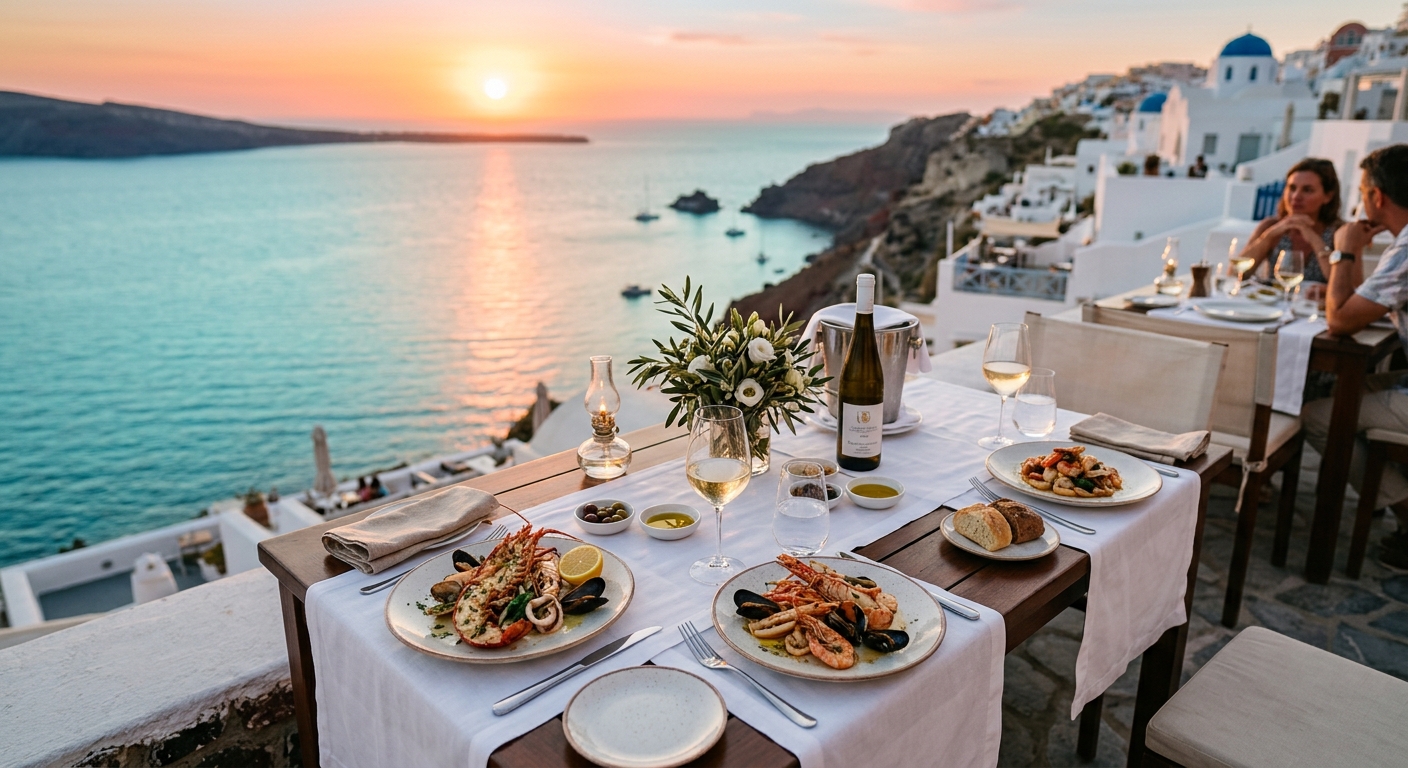
Gümüşlük approaches dining differently from the more polished resort enclaves of the Bodrum Peninsula. Here, some of the most memorable evenings begin at tables placed remarkably close to the water, with meze arriving gradually, fish selected for the table and dinner continuing well beyond sunset.
The village’s reputation is built primarily around seafood. Restaurants line the bay beside the remains of ancient Myndos, and the combination of fish, meze, rakı and waterfront dining has become part of Gümüşlük’s identity. Yet the village now offers more than the traditional fish-restaurant formula. Contemporary kitchens, garden restaurants and elevated sunset venues provide alternatives for travelers spending several nights in the area. (Bodrum.com.tr)
For visitors deciding where to eat in Gümüşlük, the most useful approach is therefore not to search for one restaurant that is supposedly “the best.” Instead, choose according to the experience you want: a classic seafood dinner at the water’s edge, a refined evening in an established institution, contemporary cooking away from the waterfront or drinks and dinner built around the sunset.
Seafood remains at the heart of the village’s culinary identity. Travelers who want to explore the category in greater depth can also discover our Best Seafood Restaurants in Gümüşlük, which focuses specifically on the restaurants, meze and fish experiences that define the waterfront.
Mimoza for an Iconic Gümüşlük Waterfront Dinner
Mimoza is one of the names most closely associated with dining in Gümüşlük.
The restaurant occupies a waterfront position at the northern end of the bay, with tables arranged beside the water and views across the boats and coastline. Its menu centers on seafood, Mediterranean cooking, fish and meze, making it a strong introduction to the traditional rhythm of an evening in the village. (Lonely Planet Italia)
The setting is a significant part of its appeal. Rather than arriving after dark, it makes sense to reserve around sunset and allow the evening to unfold gradually. Travel specialist Indagare specifically recommends arriving at dusk, combining the waterfront setting with seafood and rakı as the light changes over the Aegean. (indagare.com)
Mimoza is particularly appropriate for travelers looking for an established, atmospheric Gümüşlük experience rather than an experimental tasting menu. It is also one of the more upscale names in the village, so confirming prices and how fish is charged before ordering is sensible.

Siesta for an Established Seafood Restaurant
Siesta Restaurant provides another strong choice for travelers who want seafood without moving away from Gümüşlük’s traditional culinary identity.
Siesta has operated on the Gümüşlük waterfront since 1991, giving it considerably more history than many of the peninsula’s newer seasonal restaurants. Its menu is built around seafood, fish, meze and hot starters, while its white-and-blue waterfront setting retains the visual language associated with an Aegean fish restaurant. (Bodrum.com.tr)
It is also currently one of the better-reviewed established restaurants in the village on Tripadvisor, where seafood and Mediterranean cuisine are its principal classifications. (Tripadvisor)
Siesta therefore makes sense for travelers who value a longstanding local restaurant over a highly designed or overtly fashionable dining experience.
The distinction is important because Gümüşlük’s appeal does not depend on every restaurant reinventing Aegean cuisine. Sometimes the destination is best understood through a straightforward progression of cold meze, warm starters and fish shared around the table.
Fenerci for Seafood and Rabbit Island Views
At Gümüşlük Fenerci Restaurant, location is one of the principal reasons to book.
The restaurant sits toward the tip of the bay and is particularly associated with views toward Rabbit Island. Current local dining guides continue to recommend it as a waterfront seafood option where the outlook plays a central role in the experience. (Bodrum.com.tr)
The cuisine follows the familiar Gümüşlük formula of fish, seafood and Mediterranean dishes rather than attempting to become a formal fine-dining restaurant. That makes it particularly suitable for a long summer evening when setting and atmosphere matter as much as culinary novelty.
As with other fish restaurants in the village, it is useful to discuss the available fish, preparation and pricing with the staff before ordering rather than approaching the meal like a conventional fixed-menu restaurant.

Gümüşlük Balık Evi for a More Traditional Fish-Restaurant Experience
Travelers interested in the classic side of the village should also consider Gümüşlük Balık Evi.
Current local guides describe it as one of the village’s classic seafood addresses, with tables directly beside the water and views toward the submerged remains associated with ancient Myndos. (BodrumGuru)
This is precisely the type of restaurant that explains why Gümüşlük became a dining destination in the first place.
The experience is less about elaborate plating and more about the sequence of a Turkish Aegean fish dinner. Guests begin with cold meze, add hot seafood starters if desired and then move toward the main fish, usually accompanied by a long conversation rather than a hurried turnover of courses.
For first-time visitors to Turkey, this is also an opportunity to understand that meze is not simply a collection of appetizers. It is part of the social structure of the meal, designed to be shared gradually.
Sia Eli for Contemporary Dining Beyond the Classic Seafood Formula
Gümüşlük should not be reduced entirely to fish restaurants.
Sia Eli offers one of the clearest alternatives for travelers interested in contemporary cooking.
Rather than positioning itself directly along the familiar row of waterfront fish restaurants, Sia Eli offers a more modern dining experience surrounded by olive trees. Current Gümüşlük guides identify it with contemporary international cuisine and note its inclusion in the 2026 Michelin selection. (BodrumGuru)
That makes it especially useful within a longer Gümüşlük itinerary.
After several evenings of seafood, meze and waterfront tables, a contemporary restaurant provides contrast without requiring a drive to Yalıkavak or Bodrum Town.
It also demonstrates how Gümüşlük’s culinary identity is evolving. The village can preserve its seafood traditions while making room for chefs working with different techniques and dining formats.
Limon for Sunset and Atmosphere
For some visitors, choosing where to eat in Gümüşlük begins with the sunset rather than the menu.
Limon Gümüşlük is one of the village’s most frequently mentioned destinations for precisely that reason. Rather than sitting directly within the waterfront row of fish restaurants, it is associated with elevated views across the surrounding landscape and sea.
Current traveler feedback continues to highlight its sunset setting, while the restaurant is generally classified around Mediterranean and Turkish cuisine. (Tripadvisor)
Limon therefore belongs in a Gümüşlük dining guide for a different reason from Mimoza or Fenerci.
It is the place to consider when the setting of the evening itself is the priority. Arriving before sunset allows time for drinks and the changing light before dinner rather than treating the restaurant purely as somewhere to eat.
This distinction helps when planning several evenings in Gümüşlük: one night can be devoted to the classic waterfront seafood experience, while another can focus on sunset from above.

Karafaki Erhan Usta for Meze and Waterfront Dining
Another restaurant worth considering is Karafaki Erhan Usta.
Local 2026 guides highlight its waterfront position and substantial meze selection, placing it firmly within Gümüşlük’s traditional fish-and-rakı dining culture. (BodrumGuru)
For travelers interested in Turkish dining culture, the meze counter itself can be one of the most enjoyable parts of the experience. Rather than selecting everything immediately from a printed menu, diners can inspect the day’s preparations and construct a sequence of dishes for the table.
Vegetable preparations with olive oil, yogurt-based meze, seafood and seasonal ingredients can then lead into warm starters and fish.
One practical detail is important when searching or reserving: local guides warn that another Gümüşlük establishment uses the Karafaki name, so confirming Karafaki Erhan Usta specifically avoids confusion. (BodrumGuru)
Teras Gümüşlük for a Different Perspective on Sunset
Not every memorable Gümüşlük table needs to sit directly on the shoreline.
Teras Gümüşlük provides an elevated alternative, looking toward the sea from above rather than placing guests at water level.
Current local guides specifically recommend it for travelers who want to watch the sunset from the hillside. (BodrumGuru)
That creates a useful contrast with Gümüşlük’s more familiar restaurants.
After an evening spent almost touching the water at a traditional fish restaurant, viewing the bay from higher ground provides an entirely different sense of the landscape.
Building a Dining Itinerary Around Gümüşlük
Travelers staying for several nights should resist the temptation to repeat essentially the same seafood dinner every evening.
A better approach is to use Gümüşlük’s different settings to create variety.
Begin with one of the classic waterfront restaurants such as Mimoza, Siesta or Fenerci. This introduces the traditional combination of Aegean fish, meze and an evening beside the bay.
On another night, move away from the standard seafood format and try contemporary cooking at Sia Eli.
A third evening can revolve around sunset, perhaps at Limon or Teras Gümüşlük, where the position above the coastline changes the experience considerably.
Travelers particularly interested in seafood can then explore more of the traditional restaurants along the waterfront rather than returning automatically to the most famous name.
This is ultimately a better way to understand Gümüşlük’s food culture. The village is not defined by one celebrated restaurant but by the relationship between food, water, sunset and the slow rhythm of an Aegean evening.
Understanding the Gümüşlük Fish-Restaurant Experience
First-time visitors may find that ordering works somewhat differently from a conventional European fine-dining restaurant.
At traditional seafood establishments, the meal often begins by examining the available meze rather than immediately ordering three formal courses.
Several dishes are selected for the table and shared.
Cold meze may be followed by hot starters such as calamari, octopus or other seafood, depending on the restaurant and day’s availability. Fish then becomes the principal course.
This structure naturally creates a slower meal.
Rakı is traditionally associated with the fish-and-meze table, although Turkish wine provides another interesting option, particularly given the increasingly diverse production from the Aegean and other Turkish wine regions.
Readers interested in understanding this style of dining in greater depth can continue with Traditional Aegean Meze Culture and Dining Etiquette, while Best Turkish Wines to Pair with Seafood provides a useful companion for choosing wine with fish, shellfish and meze.
Reservations and the Best Time for Dinner
Gümüşlük becomes particularly busy during the summer season, and reservations are advisable for well-known restaurants, especially when a specific waterfront or sunset table matters.
Rather than applying a universal rule such as booking exactly two or three weeks ahead, travelers should contact their preferred restaurant directly. Demand varies considerably according to the restaurant, day and period of the season.
Timing matters almost as much as the reservation itself.
For restaurants selected primarily for their setting, arriving before sunset makes substantially more sense than booking after dark. The transition from daylight into evening is part of the attraction of dining in Gümüşlük.
Summer evenings also tend to unfold slowly. A fish-and-meze dinner is not necessarily an experience to schedule tightly between other activities.
Allowing the table to become the evening is more consistent with the destination.
Prices and Ordering Fish
It is difficult to give a useful universal budget for eating in Gümüşlük.
Restaurants vary significantly in positioning, while seafood prices can depend on species, size, availability and how the fish is sold. Wine and rakı can also materially change the final bill.
For that reason, fixed dollar estimates are less useful than transparency when ordering.
At seafood restaurants, guests should confirm the price of the selected fish, whether it is charged by weight and approximately what the total will be before preparation. The same principle applies to dishes without clearly displayed prices.
This is particularly worthwhile at the more famous waterfront establishments, where the location and reputation can place pricing considerably above that of simpler local restaurants.
A luxury dining guide should not assume that higher prices automatically indicate better food. In Gümüşlük, atmosphere, location, seafood quality, service and reputation all contribute differently to the final experience.
Choosing Where to Eat in Gümüşlük
The best restaurant ultimately depends on the evening you want to create.
For an iconic waterfront setting, Mimoza remains one of the obvious names to consider. Siesta provides an established seafood experience with decades of history, while Fenerci combines fish with particularly attractive views toward Rabbit Island.
Travelers seeking a more traditional fish-and-meze dinner can look toward Gümüşlük Balık Evi or Karafaki Erhan Usta. For contemporary cooking, Sia Eli changes the pace entirely, while Limon and Teras Gümüşlük make sunset and landscape a larger part of the experience.
What connects these restaurants is not a single culinary style.
It is Gümüşlük itself.
The village is at its best when dinner is allowed to progress slowly: arriving while the Aegean is still bright, sharing several dishes, watching the light disappear and remaining at the table long enough for the waterfront to take on a completely different atmosphere after dark.
That combination of food and place is ultimately what distinguishes eating in Gümüşlük from simply choosing another restaurant elsewhere on the Bodrum Peninsula.
Frequently Asked Questions About Eating in Gümüşlük
Is Gümüşlük particularly good for seafood?
Yes. Seafood and traditional fish restaurants are central to the village’s dining identity. Numerous restaurants line the waterfront, generally combining fish with meze and other Aegean dishes. (Bodrum.com.tr)
Which Gümüşlük restaurant is best for sunset?
There is no single choice because the perspective differs. Mimoza and Fenerci provide waterfront sunset settings, while Limon is particularly known for its elevated sunset views. Teras Gümüşlük offers another higher viewpoint over the surrounding coastline. (BodrumGuru)
Are there restaurants in Gümüşlük that are not seafood restaurants?
Yes. Although fish remains fundamental to the destination, restaurants such as Sia Eli provide a contemporary alternative, while other venues offer Mediterranean, Turkish and international cooking. (BodrumGuru)
Should restaurants in Gümüşlük be booked in advance?
Reservations are advisable for popular restaurants during the summer, particularly when a waterfront table or sunset timing is important. Mimoza, for example, is an established and heavily visited restaurant for which advance reservations are recommended. (Lonely Planet Italia)
What should first-time visitors eat in Gümüşlük?
A traditional first dinner should emphasize the local Aegean format rather than a rigid selection of specific dishes. Begin with several meze to share, add a warm seafood starter if desired and choose fish according to the day’s availability. This provides a better introduction to Gümüşlük’s dining culture than approaching the meal as a conventional three-course dinner.
By Luxury Magazine Editorial Team