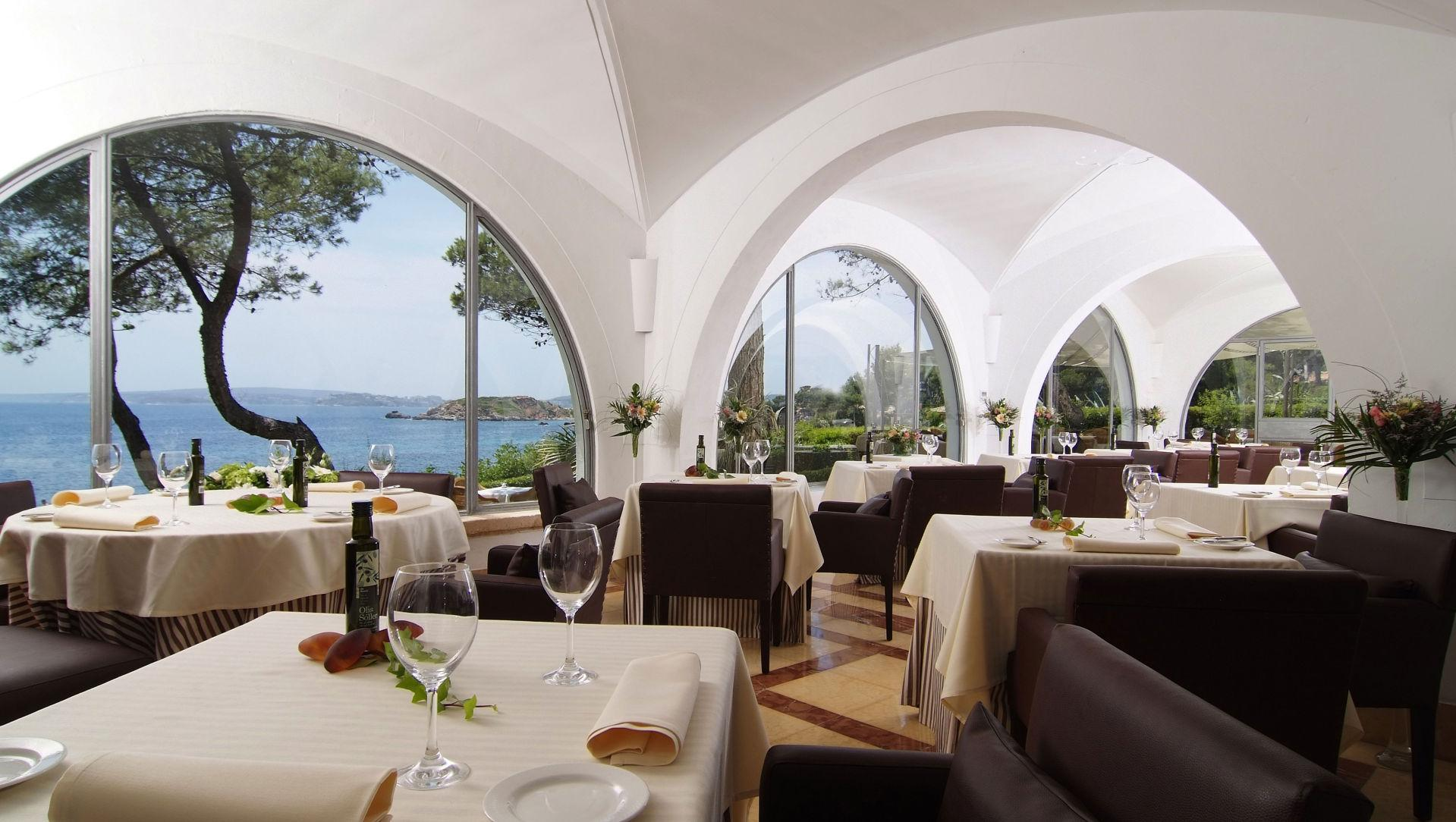
The Balearic Islands have long been associated with crystalline coves, historic fincas and Mediterranean summers, yet their appeal to luxury travelers increasingly extends to the table. Across Mallorca, Ibiza, Menorca and Formentera, dining has developed into one of the archipelago’s most rewarding ways of understanding the islands themselves.
What makes the Balearics particularly interesting is the absence of a single definition of luxury dining. In Mallorca, it may mean surrendering an evening to an ambitious Michelin-starred tasting menu. In Ibiza, the experience can move from contemporary Mediterranean gastronomy to an intimate Japanese omakase counter. Menorca offers a quieter interpretation, where seasonal produce and agricultural estates become part of the restaurant experience, while Formentera demonstrates that exceptional dining does not necessarily require formality: sometimes the defining luxury is a beautifully prepared Mediterranean lunch overlooking water of almost improbable clarity.
The result is an archipelago where gastronomy can be as important to an itinerary as the hotel, yacht or beach. These are some of the experiences that best express that diversity.
Mallorca: Michelin Dining with a Strong Sense of Place
Mallorca possesses the broadest conventional fine-dining landscape in the Balearics, and its strongest restaurants increasingly look inward for inspiration. Rather than treating the island merely as a glamorous setting for international cuisine, chefs are exploring Mallorcan recipes, seafood, meat, vegetables and culinary memory through increasingly sophisticated tasting menus.
Voro, at Cap Vermell Grand Hotel in Canyamel, represents the most ambitious end of that spectrum. The restaurant currently holds two Michelin stars, and Michelin identifies it as the standout gastronomic restaurant within the resort. (Guida Michelin)

Under chef Álvaro Salazar, Voro approaches the Mediterranean as a starting point rather than a restriction. Its appeal lies in the completeness of the evening: the tasting-menu format, precise service and intimate dining environment create the sense of a restaurant designed as a destination in its own right.
For travelers staying elsewhere on Mallorca, it can justify a journey to the island’s northeast rather than simply filling an evening close to the hotel.
Palma offers a different expression of Mallorcan gastronomy. DINS Santi Taura, inside El Llorenç Parc de la Mar, remains part of the Michelin selection and is classified by the guide as modern cuisine. (Guida Michelin) Chef Santi Taura’s work is particularly relevant to visitors who want a sophisticated dinner that remains connected to the culinary history of the island.
This distinction matters. Luxury dining in Mallorca is at its most convincing when technical ambition does not erase regional identity. Traditional flavors, local products and memories of Mallorcan cooking can be refined without being transformed into anonymous international haute cuisine.
The island consequently works particularly well for travelers who regard restaurants as a central part of a trip. A stay in Palma can combine historic architecture with ambitious urban dining, while the island’s resort regions make it possible to build a gastronomic evening into a longer countryside or coastal itinerary.
Ibiza: From Mediterranean Fine Dining to Omakase
Ibiza’s gastronomic reputation has changed substantially. The island still excels at long lunches beside the sea and glamorous restaurants that become progressively livelier after sunset, but its upper tier now includes serious chef-led dining that would merit attention even without Ibiza’s international profile.
The Michelin-starred landscape illustrates that development particularly clearly. La Gaia, Unic and Omakase by Walt represent three markedly different interpretations of contemporary fine dining, giving visitors a choice between artistic Mediterranean cuisine, locally rooted gastronomy and highly intimate Japanese dining.
La Gaia at Ibiza Gran Hotel is perhaps the clearest expression of polished Mediterranean fine dining on the island. Chef Óscar Molina builds his cuisine around Mediterranean ingredients while using contemporary techniques and carefully constructed tasting-menu progressions. The setting reinforces the experience without overwhelming it: this is an Ibiza dinner in which the restaurant itself, rather than nightlife afterward, can be the principal event.

Unic at Migjorn Ibiza Suites & Spa takes a more explicitly local direction. Its approach places Ibiza’s farmers, fishermen and small-scale producers closer to the center of the experience, demonstrating how contemporary fine dining can be connected to an island whose agricultural character is easily overlooked by visitors concentrating on its coastline.
Omakase by Walt offers the strongest contrast. Rather than Mediterranean expansiveness, the experience is deliberately concentrated around an intimate Japanese counter and a chef-led progression.

Its presence also says something important about modern Ibiza. A destination once discussed internationally primarily through clubs and beach restaurants can now sustain a Michelin-recognized Japanese concept built around precision, limited seating and close interaction between chef and diner.
For travelers interested specifically in this part of the island’s culinary evolution, our Best Fine Dining Restaurants in Ibiza explores the restaurant scene in greater depth, while Best Wine Experiences in Ibiza provides a useful counterpart for building a broader gastronomic itinerary.
Menorca: Luxury Through Produce, Landscape and Restraint
Menorca requires a different understanding of luxury.
The island’s quieter rhythm, agricultural landscape and relatively restrained development make grand theatrical dining feel less essential. Its most appealing gastronomic experiences frequently succeed because they preserve a connection between restaurant, producer and countryside.
Torralbenc is an excellent example.
Located on a former agricultural estate near Cala en Porter, the property combines a luxury hotel, vineyards and a restaurant that Michelin currently classifies as farm-to-table. The guide’s current Menorca selection also includes Smoix, Godai, Santa Mariana and seafood-focused Es Cranc, illustrating the island’s surprisingly varied restaurant landscape. (Guida Michelin)

At Torralbenc, however, the setting is inseparable from the meal. The estate environment, vineyards and emphasis on seasonal produce create a form of luxury that feels appropriate to Menorca rather than imported from somewhere else.
This is one of the broader changes shaping high-end Mediterranean travel. Increasingly, exclusivity is not measured solely by expensive ingredients or elaborate dining rooms. Knowing where vegetables were grown, understanding why a particular fish is being served that evening or drinking wine produced close to the table can create a deeper sense of privilege than a menu assembled from luxury products flown in from around the world.
Smoix in Ciutadella provides another reason to explore Menorca gastronomically. Michelin currently lists it as contemporary cuisine, while the restaurant has developed a reputation around seasonal and local produce. (Guida Michelin)

A sophisticated Menorca dining itinerary therefore benefits from variety: an estate dinner one evening, contemporary cooking in Ciutadella on another and a seafood meal closer to the coast. The experience becomes less about collecting prestigious reservations and more about discovering how different parts of the island express themselves through food.
Formentera: The Luxury of Dining Beside the Sea
Formentera is the smallest of the four principal inhabited Balearic Islands, and its luxury dining identity is correspondingly different.
This is not primarily a destination for formal tasting-menu tourism. Its greatest strength is the combination of excellent Mediterranean ingredients with extraordinary coastal settings, particularly when lunch is allowed to unfold slowly rather than being treated as a pause between other activities.
Es Molí de Sal captures that idea particularly well. The restaurant occupies a former salt mill overlooking the turquoise water around Illetes and serves Mediterranean and traditional Formentera dishes accompanied by a substantial wine offering. Its setting also opens toward sunset, with Es Vedrà visible on the horizon in the distance.

This is luxury expressed through geography.
A white tablecloth is important, but so is the view beyond it. Fresh fish matters, but so does arriving after a morning on the water. A bottle of well-chosen wine becomes part of a much larger sensory experience shaped by salt air, limestone and the intensely blue sea surrounding the island.
Formentera also rewards a different approach to time. Lunch can easily become the main event of the afternoon, particularly for travelers arriving by private yacht or making the crossing from Ibiza.
That relaxed rhythm should not be mistaken for a lack of sophistication. Some of the Mediterranean’s most memorable luxury dining experiences are precisely those in which exceptional ingredients and service are presented without unnecessary ceremony.
Dining by Yacht: The Balearics from the Water
The relationship between restaurants and the sea becomes even more interesting when dining is incorporated into a yacht itinerary.
Ibiza and Formentera are particularly suited to this format. Rather than treating a yacht charter and restaurant reservation as two unrelated activities, they can be planned as a single experience: departure in the morning, swimming in a quiet anchorage, a long lunch ashore and a leisurely return toward Ibiza as the light begins to soften.
Formentera is an obvious destination because of the contrast between its transparent water and comparatively undeveloped coastline. Yet Mallorca and Menorca can also support coastal itineraries in which the restaurant becomes one carefully chosen element within a full day at sea.
The appeal is not simply arriving somewhere by boat.
It is the absence of interruption.
There is no need to leave the beach, return to the hotel, change clothes, arrange a car and then travel to dinner. The day moves naturally from swimming to lunch and back to the water.
For travelers accustomed to highly scheduled luxury itineraries, that continuity can itself feel unusually indulgent.
Private Dining in Villas and Estates
Not every exceptional meal in the Balearic Islands needs to take place in a restaurant.
The islands’ extensive collection of private villas and historic fincas has made chef-led dining at home an increasingly natural part of luxury travel, particularly in Ibiza and Mallorca.
A private dinner changes the relationship between guest and chef. Menus can be planned around dietary preferences, children can dine on a different schedule, wine can be selected from the villa cellar or delivered in advance, and the evening can continue without the logistical pressure of returning from a restaurant.
The setting can also be extraordinary.
A terrace overlooking the Mediterranean, a garden surrounded by olive trees or the courtyard of a restored finca may offer greater privacy than even the most exclusive restaurant table.
The strongest private dining experiences avoid trying to recreate a formal restaurant inside the villa. Instead, they use the property itself. An aperitif can begin beside the pool, dinner can move to a candlelit terrace, and dessert can be served somewhere entirely different.
For Ibiza in particular, this approach pairs naturally with the island’s increasingly sophisticated farm-to-table culture. Our Farm-to-Table Dining Experiences in Ibiza looks more closely at the relationship between local agriculture and the island’s modern culinary scene.
The Return of the Long Mediterranean Lunch
One of the pleasures of dining in the Balearics is that luxury does not have to wait until evening.
The long Mediterranean lunch remains one of the archipelago’s defining experiences.
It works especially well because the meal can occupy the center of the day rather than being squeezed into it. Guests arrive after swimming or sailing, order seafood and cold wine, and remain at the table as the intensity of the afternoon sun begins to fade.
Ibiza and Formentera are particularly associated with this style of dining, but Mallorca and Menorca offer equally compelling coastal versions.
The key is choosing carefully.
A famous beach address is not automatically a luxury dining experience, just as a Michelin star is not necessary for a memorable lunch. Setting, ingredient quality, service, atmosphere and the ability of a restaurant to express its location all matter.
In this context, luxury is partly the privilege of having nowhere else to be.

Wine Is Becoming More Important to the Balearic Dining Experience
The islands’ relationship with wine deserves more attention than it often receives.
Mallorca has the most developed wine-tourism infrastructure of the Balearics, and its indigenous varieties give restaurants opportunities to create pairings that feel genuinely connected to the island. Ibiza’s smaller wine culture offers a different experience, with vineyards and producers helping visitors understand the rural landscape beyond the resorts and beaches.
Wine can therefore serve two purposes within a luxury dining itinerary.
At the table, it can deepen the relationship between food and destination. Away from the restaurant, a winery visit provides context for what appears in the glass later that evening.
This is particularly valuable for travelers who have already visited major European wine regions. The Balearics do not need to compete with Bordeaux, Burgundy or Rioja on scale. Their appeal lies in drinking wines within the landscapes that produced them, often only a relatively short distance from the coast.
Choosing the Right Island for a Gastronomic Trip
Travelers choosing between the Balearic Islands should consider the style of dining they actually enjoy rather than simply asking which island has the “best” restaurants.
Mallorca is the strongest choice for a trip built substantially around fine dining. It offers the greatest depth, particularly for travelers interested in Michelin-starred restaurants, tasting menus and the relationship between contemporary cooking and Mallorcan tradition.
Ibiza offers the most eclectic luxury dining scene. A trip can move between Michelin-starred gastronomy, omakase, farm-to-table restaurants, glamorous coastal lunches and internationally influenced dining without feeling repetitive.
Menorca is particularly appealing for travelers interested in provenance, local products and restaurants integrated into a quieter landscape. Michelin’s current selection around Ciutadella and elsewhere on the island includes contemporary, Japanese, farm-to-table and seafood cooking, reflecting greater variety than Menorca’s understated reputation might initially suggest. (Guida Michelin)
Formentera is the choice for travelers who place setting and rhythm at the center of the meal. It is less about formal gastronomic progression and more about excellent Mediterranean food served beside one of Europe’s most beautiful stretches of sea.
A longer Balearic itinerary can, of course, combine these identities. Mallorca and Ibiza offer the deepest restaurant scenes, while adding Menorca or Formentera introduces a useful change of pace.
Frequently Asked Questions
Which Balearic Island is best for fine dining?
Mallorca offers the greatest depth for travelers primarily interested in formal fine dining and tasting menus, while Ibiza combines Michelin-level restaurants with a particularly diverse collection of international, Mediterranean and experiential concepts. Menorca is stronger for understated, produce-driven gastronomy, while Formentera excels at sophisticated seaside dining.
Does Mallorca have Michelin-starred restaurants?
Yes. Mallorca has a substantial Michelin-recognized dining scene. Among its prominent restaurants are Voro at Cap Vermell Grand Hotel, which holds two Michelin stars, as well as restaurants such as DINS Santi Taura in Palma. (Guida Michelin)
Is Ibiza a serious fine-dining destination?
Yes. Ibiza’s restaurant scene now extends far beyond beach clubs and nightlife. Its high-end offering includes Mediterranean tasting menus, cuisine centered on local producers and specialist Japanese dining, alongside a large collection of sophisticated coastal restaurants.
Is Menorca good for luxury dining?
Yes, although its character is more understated. Michelin’s current Menorca selection includes Smoix, Godai, Torralbenc Menorca, Santa Mariana and Es Cranc, among others, covering contemporary, Japanese, farm-to-table and seafood cuisine. (Guida Michelin)
What is the best type of dining experience in Formentera?
A long seaside lunch is arguably the island’s quintessential luxury dining experience. Restaurants such as Es Molí de Sal combine Mediterranean cuisine with exceptional views over the waters around Illetes, allowing the landscape to become part of the meal.
Should restaurants in the Balearic Islands be booked in advance?
For sought-after restaurants during the summer season, advance planning is advisable, particularly for tasting-menu restaurants, small dining rooms, sunset tables and popular waterfront venues. The most appropriate lead time varies considerably by restaurant and date, so reservations should be checked directly rather than relying on a universal rule.
Can a luxury dining trip combine several Balearic Islands?
Yes. Ibiza and Formentera are particularly natural companions because of their proximity and ferry connections, while Mallorca and Menorca can be incorporated into a longer island-hopping itinerary. For a gastronomy-focused trip, allowing several nights on each principal island is more rewarding than attempting to visit all four quickly.
Is luxury dining in the Balearics only about Michelin-starred restaurants?
No. Michelin-starred restaurants represent only one part of the experience. Some of the archipelago’s most characteristic luxury meals take place on waterfront terraces, agricultural estates, private villas and during yacht itineraries. The defining qualities are often the combination of ingredients, setting, service and a genuine connection to the island.
By Luxury Magazine Editorial Team