Photography courtesy of Caviar de Neuvic.
A French Perspective on the World of Caviar
Few foods carry the same sense of occasion as caviar. Its delicate appearance, distinctive texture and complex flavour have made it a symbol of refined dining. Yet behind every tin lies a long process that begins years before the first spoonful reaches the table.
Based in the Dordogne region of France, Caviar de Neuvic has developed an approach to caviar production that brings together sturgeon farming, careful processing and attention to the natural qualities of the roe. Its expertise reflects an understanding of the fish, the time required for its development and the importance of every stage in the production process.
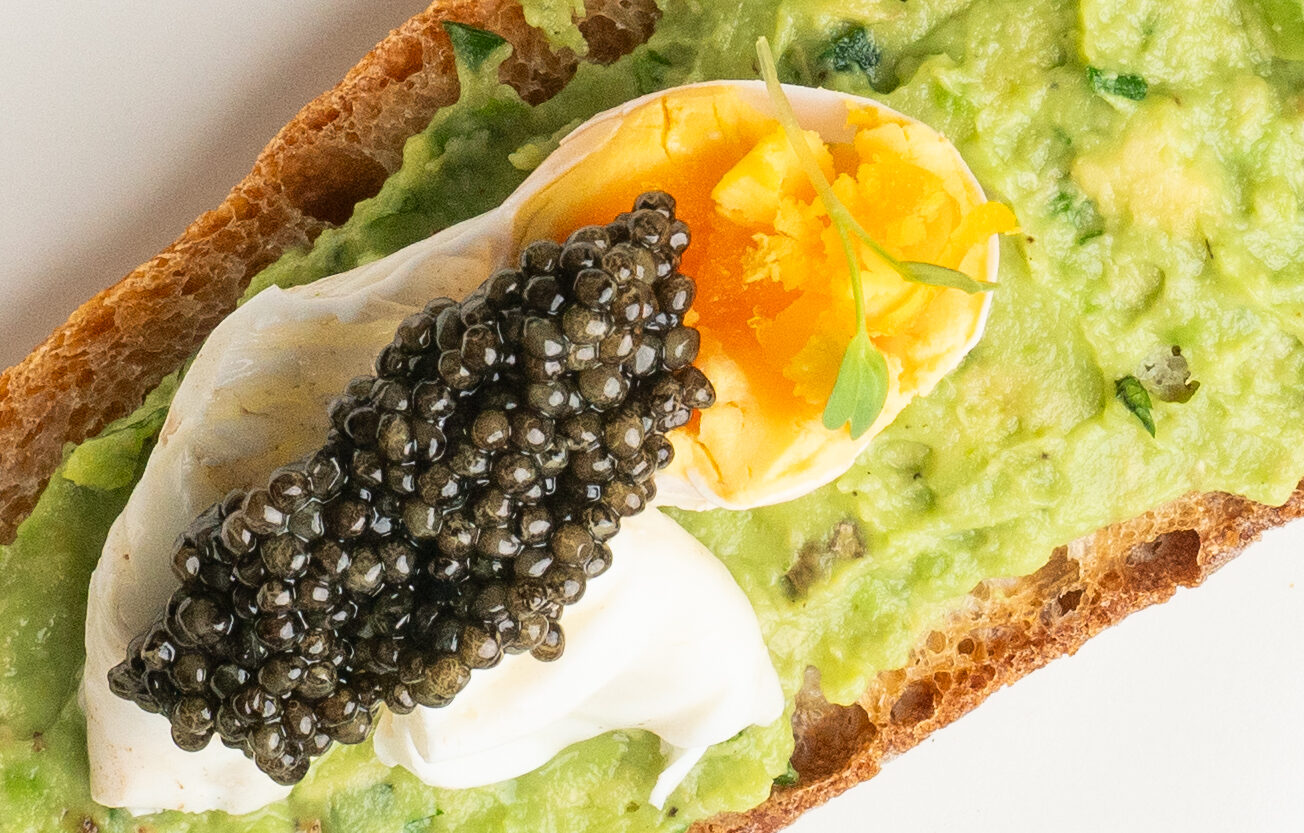
Caviar is not simply a generic name for fish eggs. The term refers specifically to the salted roe of sturgeon. Its character depends on several elements, including the species, the conditions in which the fish are raised, the maturity of the eggs and the way they are prepared. Even small differences can influence the final result, from the size and colour of the grains to their texture and flavour.
Understanding these details makes the experience of tasting caviar more interesting. It also reveals why different varieties should not be judged by appearance alone.
Photography courtesy of Caviar de Neuvic.
The Sturgeon: Where Every Grain Begins
The sturgeon is among the oldest fish species still found in the world’s waters. Its unusual anatomy and long life cycle distinguish it from many other fish. Rather than having a typical skeleton made entirely of bone, it has a largely cartilaginous structure. Its body is also protected by rows of hard plates, giving it a distinctive appearance.
There are around 24 recognised species of sturgeon, although only some are used for caviar production. Each has its own characteristics, and the roe can differ considerably in size, colour, firmness and taste.
The time required for a sturgeon to produce mature eggs is another important factor. Depending on the species, this can take several years, with some varieties requiring close to two decades. This long development period makes caviar production a patient process, demanding consistent care and monitoring.
At Caviar de Neuvic, the development of the fish is followed through different stages. Ultrasound examinations help determine their sex and monitor the progress of the females as they approach maturity. This allows the producer to assess when the roe is ready for harvesting.
The sturgeon also has culinary value beyond its eggs. Caviar de Neuvic is committed to making use of approximately 95% of each fish, developing products beyond caviar. Its range includes smoked sturgeon, pâtés and rillettes, demonstrating a broader approach to production that seeks to valorise the fish as a whole.
Five Varieties, Five Distinctive Characters
Caviar is often discussed as though it were a single product. In reality, the differences between sturgeon species create a wide range of tasting experiences. Grain size and colour provide the first clues, while texture and flavour reveal more about each variety.
Caviar de Neuvic presents five varieties, each with its own profile.
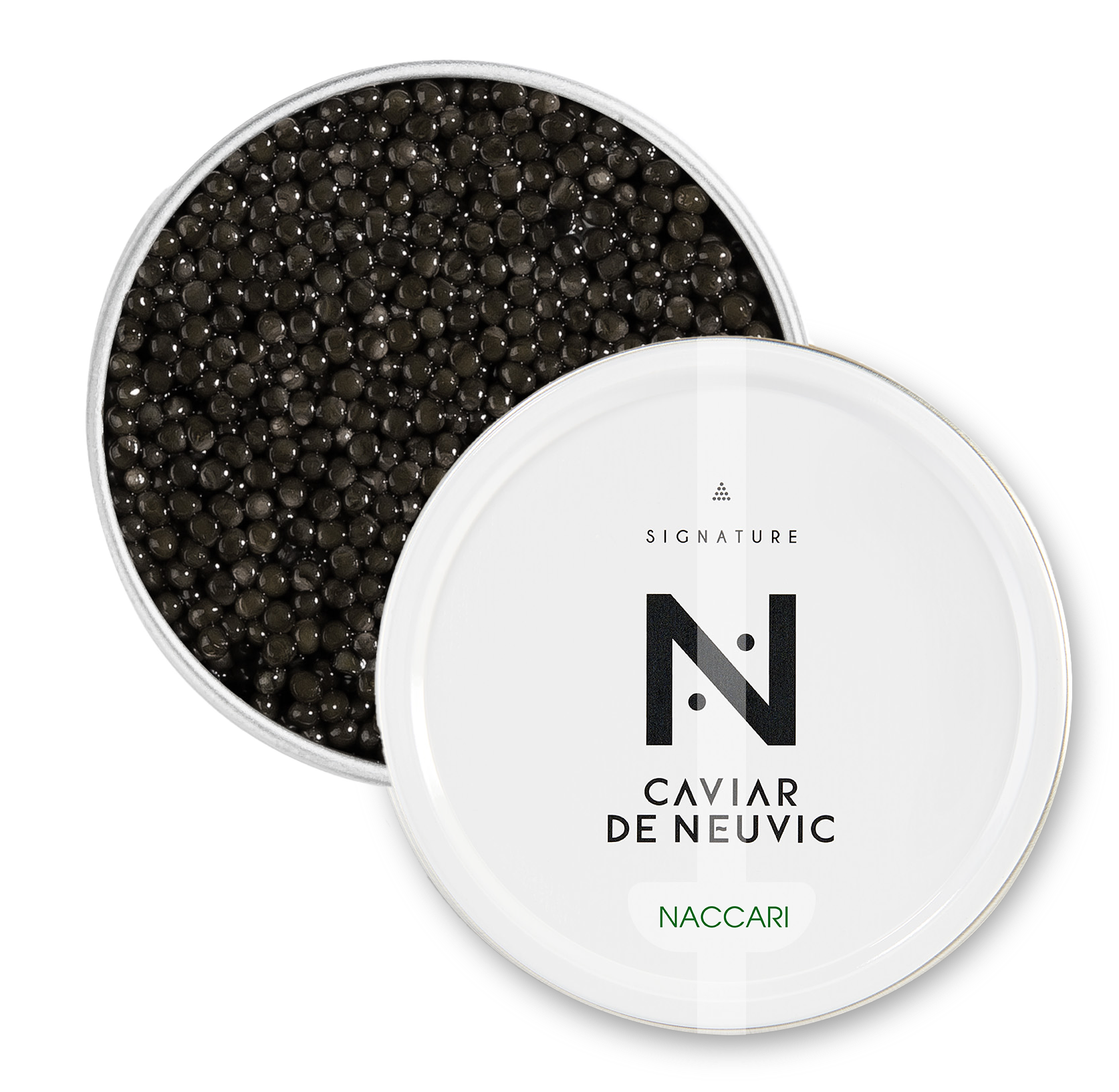
Naccarii is characterised by medium-sized grains ranging from grey to anthracite. Its texture is soft and melting, with predominantly buttery notes complemented by hints of walnut and hazelnut. A gentle saline finish completes its balanced aromatic profile. The sturgeon requires approximately nine to ten years of farming before harvesting, reflecting the patience involved in producing this variety.
Photography courtesy of Caviar de Neuvic.
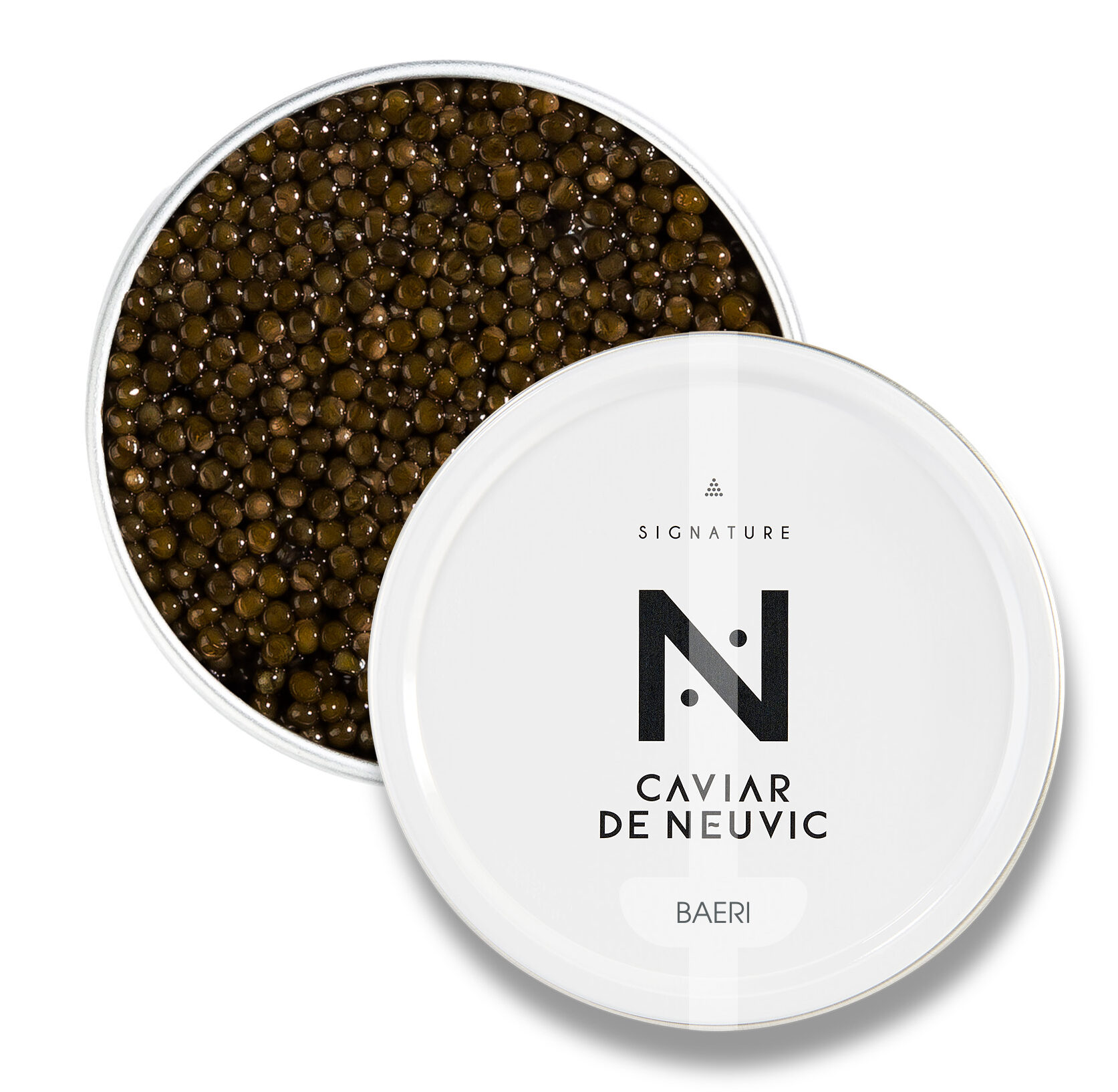
Baeri offers medium-sized grains ranging from light grey to black. Its melting texture is accompanied by delicate marine notes and buttery flavours, followed by a subtle hazelnut finish. The combination creates a smooth and balanced tasting experience, with a character that remains closely connected to the natural qualities of the roe.
Photography courtesy of Caviar de Neuvic.
Oscietra, also known as Ossetra, offers a different expression. Its medium-sized grains can display golden reflections and have a firmer texture. The flavour has a more pronounced marine character, developing into a lingering finish. The sturgeon requires approximately twelve years of farming, making this variety another example of the time and care involved in caviar production.

Photography courtesy of Caviar de Neuvic.
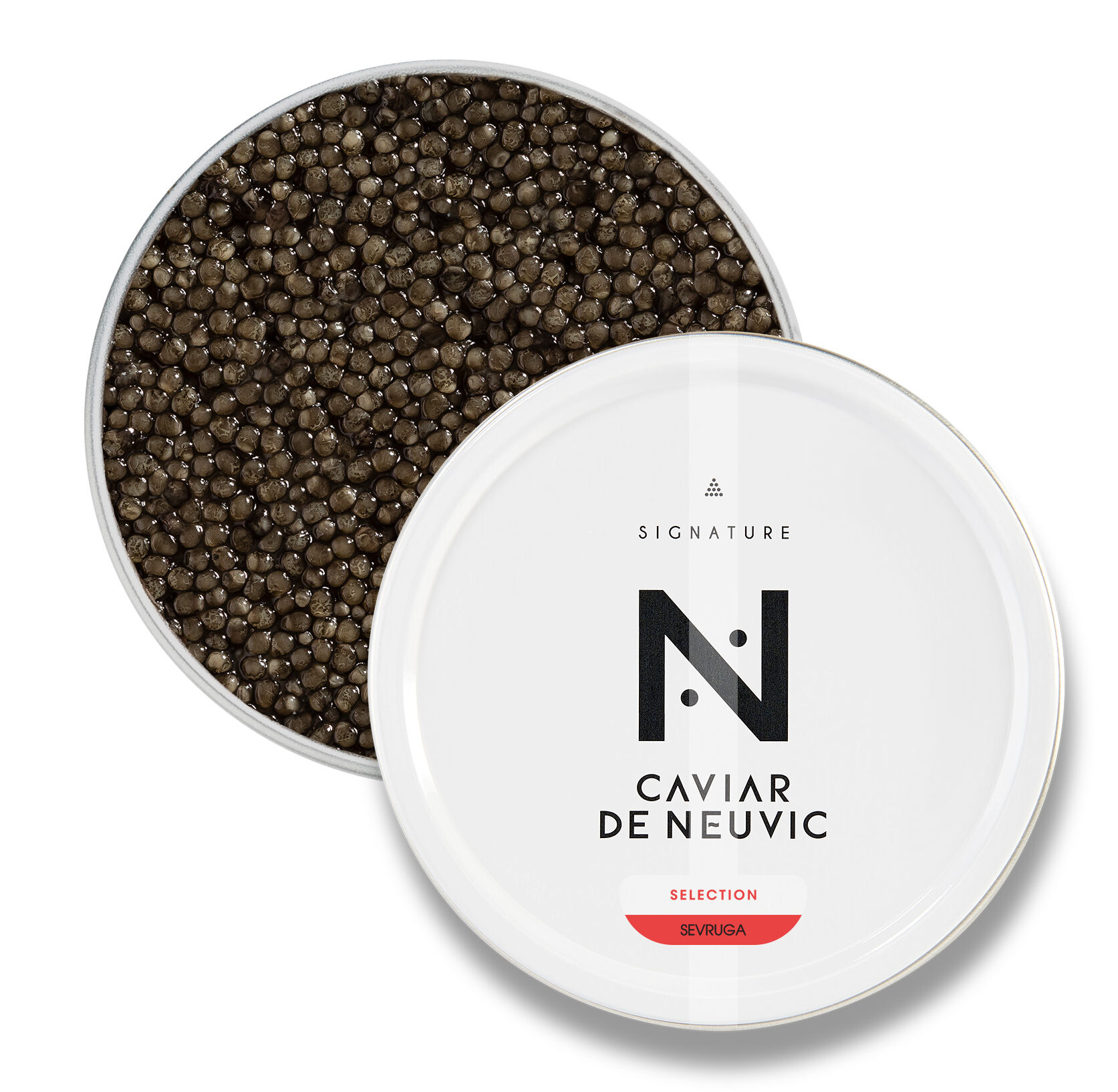
Sevruga is distinguished by its small, anthracite-coloured grains. Its flavour is distinctly pronounced, with clear marine and saline characteristics. This more expressive profile sets it apart from varieties with softer and more delicate aromatic qualities, offering a different experience for those who appreciate a stronger marine character.
Photography courtesy of Caviar de Neuvic.
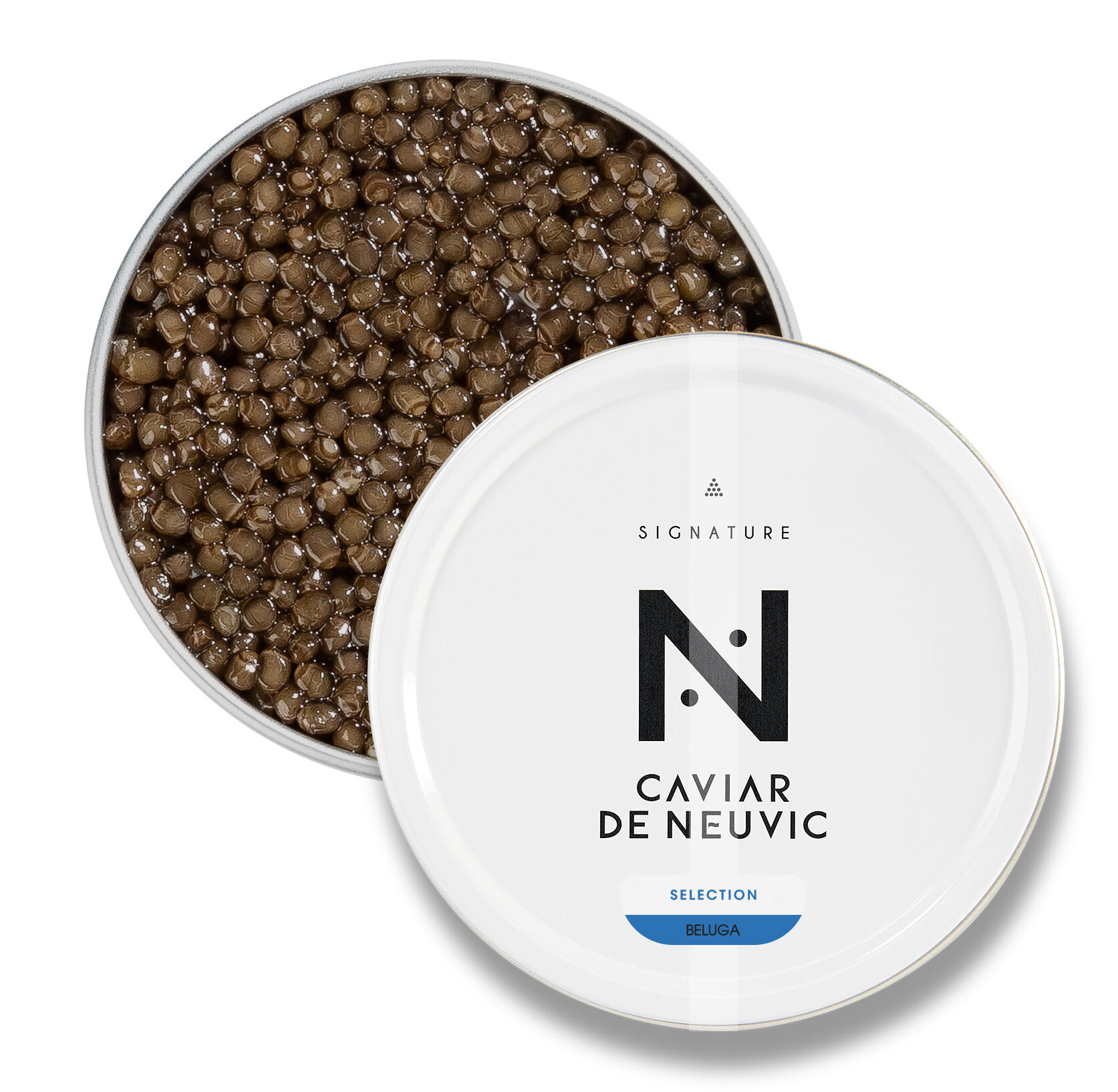
Beluga is the most immediately recognisable of the five. Its exceptionally large grains usually display light-grey tones, while the mouthfeel is generous and creamy. Its aromatic profile is rich yet balanced, offering depth without losing its refinement. The sturgeon requires approximately eighteen years to reach maturity, making Beluga one of the most time-intensive varieties in the selection.
Photography courtesy of Caviar de Neuvic.
The differences between these caviars are not simply a matter of prestige or price. They offer distinct combinations of texture, intensity and aroma. Exploring them side by side can be one of the most rewarding ways to understand the diversity of sturgeon roe.
From Fresh Roe to a Finished Caviar
The transformation of fresh roe into caviar requires precision at every stage. Following extraction, the roe is carefully sieved to separate the eggs from the surrounding membrane and other unwanted material.
The grains are then rinsed and inspected. This stage is important because the quality of the final product depends on the cleanliness and integrity of the eggs. They must retain their natural shape while being handled with care.
Salt is introduced in a controlled quantity to prepare the roe and develop its final character. Once salted, the caviar is packed into maturation tins, where it undergoes the necessary maturation process. It is subsequently transferred into smaller tins for presentation and sale.
Each stage requires a balance between preserving the natural qualities of the roe and allowing its flavour to develop. Salting, handling and maturation all contribute to the result. The aim is to maintain the identity of each variety while respecting the characteristics of the eggs.
Temperature is particularly important once the caviar has been prepared. Caviar de Neuvic recommends refrigerated storage between 0°C and 4°C, following the specific instructions indicated on the packaging. Respecting these conditions helps preserve the quality and characteristics of the product.
The result is a carefully prepared food in which the natural qualities of the roe remain central. From the initial selection of the eggs to their final presentation, every stage contributes to the experience of the finished caviar.
Responsible Farming and a Broader Philosophy
Fine caviar depends on the health and development of the sturgeon. This makes the conditions in which the fish are raised an essential part of production. Long maturation periods require careful observation, suitable water conditions and consistent attention throughout the animals’ lives.
Caviar de Neuvic places particular importance on the wider impact of its activities. The Maison is the first French fish farm and the first caviar producer worldwide to achieve B Corp certification, with an overall impact score of 95.1 points.
This certification reflects an approach to business that considers more than the quality of the final product. It evaluates a company’s impact across several areas, including environmental responsibility, employee welfare, community relationships, customer commitments and corporate governance.
For Caviar de Neuvic, responsible production also means making the most of the resources involved in raising each sturgeon. The Maison is committed to valorising 95% of each fish, developing a range of products beyond caviar itself. Smoked sturgeon, pâtés and rillettes are among the products that extend the culinary possibilities of this fish.
This approach gives greater importance to the entire production process, rather than focusing exclusively on the roe. It also reflects a broader philosophy in which the value of a premium food product is connected to the care taken in producing it.
For a product associated with rarity and indulgence, this wider perspective adds another dimension to its identity. The experience of caviar can be appreciated not only for its flavour, but also for the decisions and commitments involved in bringing it to the table.
Signature and Réserve: Two Expressions of Refinement
Photography courtesy of Caviar de Neuvic.
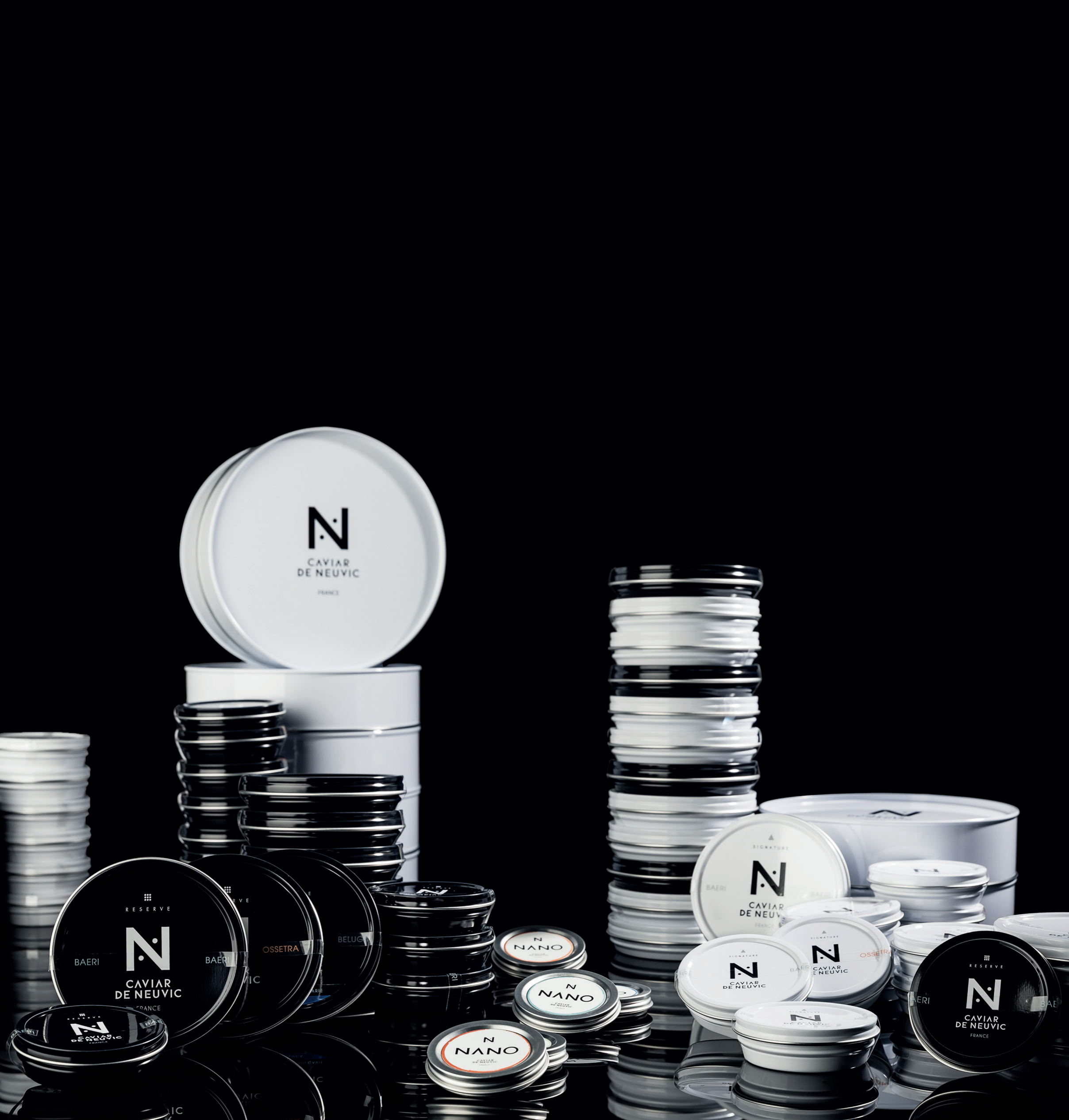
Caviar de Neuvic organises its selection around two principal collections: Signature and Réserve.
Signature brings together a selection of caviars that reflects the Maison’s expertise. Each variety is presented through a balanced aromatic profile, allowing the natural characteristics of the different sturgeon species to remain at the forefront. The collection offers an opportunity to appreciate the individual qualities of each caviar while discovering the producer’s approach to selection and preparation.
Réserve represents a more exclusive expression of the Maison’s selection. It focuses on exceptional batches chosen for their grain appearance, texture and aromatic qualities. Particular attention is given to the individual characteristics of each selection, resulting in a collection that highlights especially distinguished examples of caviar.
Although both collections reflect the same commitment to quality, they offer different perspectives on the product. Signature emphasises the natural characteristics of each species and the Maison’s expertise, while Réserve places greater importance on the selection of exceptional batches.
This distinction allows enthusiasts to explore caviar according to their preferences, whether they are drawn to the balanced character of individual varieties or to the particular qualities of more exclusive selections.
How to Taste Caviar Properly
A considered tasting begins before the first grain reaches the palate. Colour and size offer an initial impression, while the appearance of the eggs can help distinguish one variety from another. The caviar should not have an unpleasant or strong smell. Its aromas are generally subtle, and its flavour becomes clearer during tasting.
The best approach is to begin with a small portion and allow the grains to rest briefly on the palate. This makes it easier to appreciate their texture and the way the flavour develops. Depending on the variety, the experience may reveal buttery, nutty or marine notes, followed by a saline finish.

Photography courtesy of Caviar de Neuvic.
The serving utensil also deserves attention. Mother-of-pearl, porcelain and wood are traditional choices because they allow the caviar to retain its natural taste. Gold and other suitable non-reactive materials can also be used. Silver and certain metals are generally avoided because contact with the roe can introduce unwanted metallic notes.
For a first tasting, several small portions are preferable to one large serving. This allows different varieties to be compared without overwhelming the palate. As a general guide, 20 to 30 grams per person can be suitable for an introductory tasting or an appetiser. Around 30 to 40 grams offers a more generous experience, while 100 to 125 grams is an indulgent quantity for those who wish to make caviar the centre of the occasion.
Champagne, Wine and Other Pairings
The right pairing should complement caviar rather than compete with it. Champagne is a natural choice, particularly Brut and Extra Brut styles with restrained dosage. Blanc de Blancs Champagne can also work well, offering freshness and a fine structure that supports the delicate character of the roe.
Dry white wines provide another possibility. Mineral and floral expressions can accompany the saline and buttery qualities of different varieties without dominating them. The choice should remain balanced, with excessive oak or sweetness generally less suitable for a traditional tasting.
Vodka is also associated with caviar service. A small chilled measure is sometimes enjoyed before tasting, as its clean profile can prepare the palate for the food. It should remain an accompaniment rather than the focus of the experience.
For a non-alcoholic option, light floral green tea offers a more delicate alternative. Its restrained character allows the flavours of the caviar to remain clear.
Ultimately, the most successful pairing depends on the variety being served. A subtle caviar may benefit from a particularly delicate Champagne, while a fuller and more expressive selection can accommodate a wine with greater structure.
A More Considered Appreciation of Caviar
Caviar is often associated with celebration, exclusivity and the rituals of fine dining. Yet its appeal goes beyond its status. The long development of the sturgeon, the careful preparation of the roe and the differences between individual varieties all contribute to an experience that rewards attention.
Caviar de Neuvic brings these elements together through a French approach to sturgeon farming and caviar production. Its selection offers different expressions of flavour and texture, while its wider philosophy places importance on responsible practices and the use of the fish as a whole.
For those discovering caviar for the first time, the best starting point may be a simple comparison of varieties. For experienced enthusiasts, the pleasure lies in recognising the finer distinctions between grain, texture and finish.
In either case, caviar is best appreciated without unnecessary ceremony: served at the right temperature, tasted slowly and allowed to express its own character.
Frequently Asked Questions
What is Caviar de Neuvic?
Caviar de Neuvic is a French caviar producer based in the Dordogne region. Its range includes several varieties of sturgeon caviar, presented through its Signature and Réserve collections.
What are the main types of caviar offered by Caviar de Neuvic?
The producer presents five varieties: Naccarii, Baeri, Oscietra, Sevruga and Beluga. They differ in grain size, colour, texture and flavour, offering a range of tasting experiences.
How should caviar be stored?
Caviar should be kept refrigerated at a temperature between 0°C and 4°C. The recommended consumption period depends on the packaging and product. Once opened, it is best enjoyed promptly, following the producer’s storage instructions.
Which drinks pair well with caviar?
Brut or Extra Brut Champagne, particularly Blanc de Blancs, is a classic choice. Dry white wines with mineral or floral character can also work well. Light floral green tea offers an alternative without alcohol.
What is the best quantity of caviar per person?
For an introductory tasting or appetiser, approximately 20 to 30 grams per person is a useful guide. Around 30 to 40 grams provides a more generous portion, while 100 to 125 grams is suitable for a particularly indulgent serving.