Stress rarely presents itself in only one way. For one traveller, it may appear as tight shoulders after months spent working at a desk. For another, it is difficulty switching off after a demanding schedule. Long flights, disrupted sleep, constant digital connection and an intense travel itinerary can add another layer of physical and mental fatigue.
This is precisely why massage remains such an important part of Spain’s growing luxury wellness landscape.
From Mediterranean resort spas in Marbella to holistic retreats in Ibiza and sophisticated urban spas in Madrid and Barcelona, massage is increasingly treated not as an isolated indulgence but as one element within a broader approach to rest and recovery. Leading properties combine manual therapies with hydrotherapy, meditation, movement, nutrition and sleep-focused programmes, allowing guests to choose a treatment according to how they actually feel rather than simply selecting the most familiar name on a spa menu.
Nevertheless, not every massage is designed for the same purpose. A powerful deep-tissue treatment may be appropriate for muscular tightness, yet it may not be the obvious choice for somebody primarily seeking calm. Similarly, Thai massage can introduce stretching and movement, whereas aromatherapy massage places greater emphasis on sensory relaxation.
Understanding those differences makes it considerably easier to choose well.
Relaxation Massage: The Classic Starting Point for Stress Relief
For travellers whose principal objective is simply to slow down, a well-executed relaxation massage remains one of the most accessible choices.
The emphasis is generally on flowing movements, comfortable pressure and continuity rather than intensive work on individual muscular restrictions. Consequently, the treatment can be particularly appropriate when stress feels more mental than physical or when a guest does not want a demanding therapeutic session.
The atmosphere surrounding the treatment matters as well.
Luxury spas increasingly consider lighting, temperature, scent and sound as part of the overall experience. When these elements are carefully controlled, massage becomes less about addressing a single area of discomfort and more about creating an uninterrupted period during which external stimulation is deliberately reduced.
This makes relaxation massage particularly attractive at the beginning of a holiday. After travelling, checking into a hotel and adapting to a new environment, an uncomplicated full-body treatment can provide a gentle transition into a slower rhythm.
It is also one of the easiest therapies to personalise. Pressure can normally be adjusted, while additional attention can be directed towards common tension areas such as the neck, shoulders, back or scalp.
For first-time spa guests, this is often the most sensible place to begin.
Aromatherapy Massage: Adding a Sensory Dimension
Aromatherapy massage develops the relaxation concept further by incorporating aromatic plant extracts and essential oils into the treatment experience.
Rather than relying entirely on manual technique, the therapy uses scent as another sensory element. Depending on the spa and treatment, blends may incorporate ingredients such as lavender, citrus, rosemary or geranium.
At Marbella Club, for example, the current Stress-Reducing Ritual combines body and facial massage with aromatic oils and finishes with scalp massage. The resort positions the two-hour experience specifically around reducing stress, encouraging deep relaxation and supporting restful sleep.
This illustrates why aromatherapy works particularly well within luxury hospitality.
The objective is not necessarily to make the massage technically more intense. Instead, scent, touch, sound and environment are brought together to create a more immersive ritual.
For travellers who find it difficult to mentally disconnect during massage, that multisensory approach can be particularly appealing. Attention gradually shifts away from schedules, phones and external demands towards the immediate physical experience.
As a result, aromatherapy massage is an excellent choice for guests seeking emotional decompression rather than intensive muscular work.
Head, Neck and Shoulder Massage: Targeting Everyday Tension
Not every stress-relieving treatment needs to involve the entire body.
For many modern travellers, the neck and shoulders are precisely where accumulated tension is most noticeable. Long periods using laptops and smartphones, extended flights and demanding work schedules can all leave this area feeling tight.
A focused head, neck and shoulder massage therefore offers a more targeted alternative.
The therapist can concentrate on the upper back, shoulders, cervical area and scalp rather than dividing treatment time across the entire body. For a shorter appointment, this can make considerably more sense than trying to perform a complete massage within a limited period.
Scalp work also changes the character of the treatment. Unlike intensive muscular massage, it can provide a particularly gentle conclusion, allowing the final part of the session to become progressively quieter.
This combination is increasingly visible within sophisticated wellness programmes. Marbella Club, for instance, currently offers a specialist stress-relief experience combining advanced scalp massage with targeted shoulder and neck work.
For business travellers, guests arriving after long flights and anyone carrying noticeable upper-body tension, this is one of the most practical treatments to consider.
Deep-Tissue Massage: Better for Muscular Tension Than Pure Relaxation
Deep-tissue massage is frequently associated with stress relief, although the distinction between muscular and mental stress is important.
This technique generally uses firmer, more focused work than a classic relaxation massage. The objective is often to address areas of muscular tightness rather than creating uninterrupted gentle relaxation.
Consequently, deep tissue may be appropriate when stress has a strong physical component. A traveller experiencing persistent tightness across the back and shoulders, for example, may prefer targeted muscular work to a very light massage.
However, more pressure does not automatically mean a better stress-relieving treatment.
For somebody who is exhausted, sensitive to pressure or primarily seeking psychological calm, an aggressive massage may actually feel less relaxing. Communication with the therapist is therefore essential.
The best luxury spas increasingly move away from rigid pressure categories and towards personalisation. The therapist can begin at a comfortable level and adjust technique according to the guest’s response.
That approach is preferable to assuming that every muscular problem requires maximum pressure.
Hot-Stone Massage: Warmth as Part of the Ritual
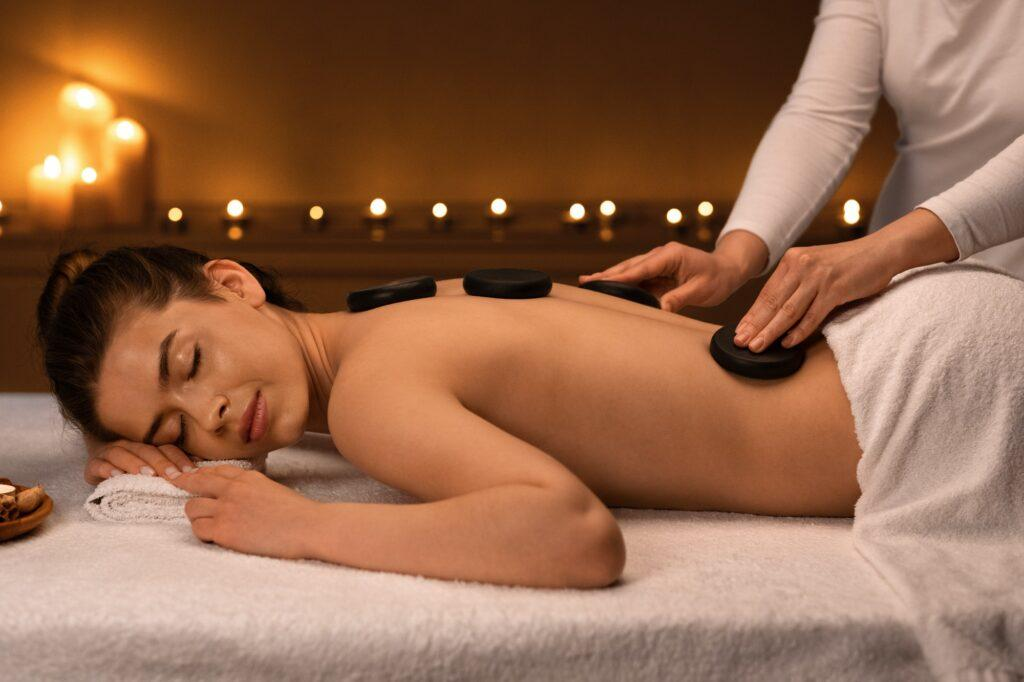
Hot-stone massage introduces heat into the treatment, traditionally using smooth heated stones alongside manual massage techniques.
The warmth creates a distinctly different sensory experience from conventional massage. Instead of pressure alone being used to work with muscular tension, sustained heat becomes part of the ritual.
For this reason, hot-stone treatments can feel particularly comforting during cooler seasons or after active days involving hiking, golf or extensive walking.
They can also suit travellers who want something more enveloping than a standard relaxation massage without necessarily choosing the stronger pressure associated with deep-tissue work.
The pace tends to be important. When performed as a relaxation ritual, the transition between warm stones and hands can create a continuous treatment rather than a sequence of separate techniques.
Nevertheless, heat-based treatments are not appropriate for everyone, so guests with relevant health conditions or heat sensitivity should discuss suitability with the spa before booking.
For the right traveller, however, hot-stone massage remains one of the most atmospheric approaches to physical relaxation.
Traditional Thai Massage: Stretching, Pressure and Movement
Traditional Thai massage offers a substantially different experience.
Rather than focusing primarily on oil-based strokes, traditional Thai techniques typically combine pressure with assisted movement and stretching. Depending on the style and spa, the treatment may be performed without oil and with the guest wearing comfortable clothing.
This makes it particularly interesting for active travellers who associate relaxation with releasing physical stiffness rather than remaining completely passive.
Anantara Villa Padierna in Marbella is among the Spanish luxury resorts that have incorporated Asian massage traditions into a much wider spa concept. Its current spa offering includes signature massage alongside therapeutic treatments, while the resort’s extensive facilities include Roman-inspired bathing areas, hammam, Finnish and Greek saunas and water-based relaxation facilities.
The wider setting matters because Thai-inspired therapies can pair effectively with a slower thermal experience afterwards.
Nevertheless, guests should understand the style before booking. Someone expecting a gentle oil massage may find assisted stretching surprising, whereas a traveller who enjoys yoga, mobility work or active recovery may appreciate it considerably more.

Shiatsu: A Japanese Approach to Pressure and Balance
Spain’s leading wellness destinations increasingly look beyond Mediterranean traditions.
Shiatsu, which originated in Japan, uses pressure applied through the hands and fingers according to its traditional framework. Unlike a classic oil massage, it offers a different tactile experience and is generally approached as a structured bodywork tradition rather than simply a variation of Swedish-style massage.
Its presence in Spanish luxury wellness demonstrates how international the country’s spa culture has become.
Marbella Club, for example, has included specialist Shiatsu programming within its wellness calendar, describing it as a Japanese healing tradition.
For stress-focused travellers, the attraction lies partly in the rhythm of the treatment. Instead of seeking constant flowing movement, Shiatsu introduces sustained and sequential pressure.
Guests interested in Asian wellness traditions may therefore find it a compelling alternative to conventional European massage.
As with other specialist techniques, however, the quality and training of the practitioner are especially important. Choosing an experienced therapist is more meaningful than selecting a therapy purely because its name sounds exotic.
Thalassotherapy Massage: Stress Relief Through the Mediterranean
Spain has a natural advantage that few wellness destinations can replicate: an extensive coastline and a longstanding relationship with the Mediterranean and Atlantic.
Thalassotherapy uses seawater and marine elements within wellness treatments, making it especially relevant to coastal Spanish resorts.
Marbella Club provides one of the country’s clearest luxury examples. Its Thalasso Spa places Mediterranean seawater at the centre of the experience, with a dynamic seawater pool featuring underwater high-pressure jets, swan-neck fountains and Jacuzzi beds designed to work across areas including the legs, neck and back. The spa also combines marine ingredients with massage and body rituals.
This produces a broader experience than massage alone.
A guest can move through water-based relaxation before or after a manual treatment, allowing hydrotherapy and massage to complement one another. The result can feel particularly appropriate in Spain because the therapy is connected directly to the surrounding coastal environment.
For travellers seeking a treatment that feels distinctly Mediterranean rather than internationally generic, thalassotherapy deserves serious consideration.
Personalised Massage: Increasingly the Luxury Standard
Perhaps the most important development in modern spa culture is also one of the simplest: abandoning the assumption that every guest needs exactly the same massage.
Stress is highly individual.
One person may need extended attention across the shoulders. Another may prefer a full-body treatment with very little pressure. An active traveller might want stretching incorporated, while a sleep-deprived guest may value scalp and facial massage more than intense work on the legs.
Personalisation allows these priorities to be combined.
Anantara Villa Padierna’s spa material, for example, describes personalised massage focused on areas of muscular tension or accumulated stress, using combinations of stretching, pressure or drainage and essential oils. Its current signature massage likewise combines oils with purpose-designed movements and is intended to encourage deep relaxation.
This is increasingly what separates high-end massage from a standardised treatment.
The luxury is not simply a beautiful room or expensive oil. It is having enough consultation, time and therapist expertise to adapt the session intelligently.
Combining Massage with Hydrotherapy
Massage does not necessarily need to stand alone.
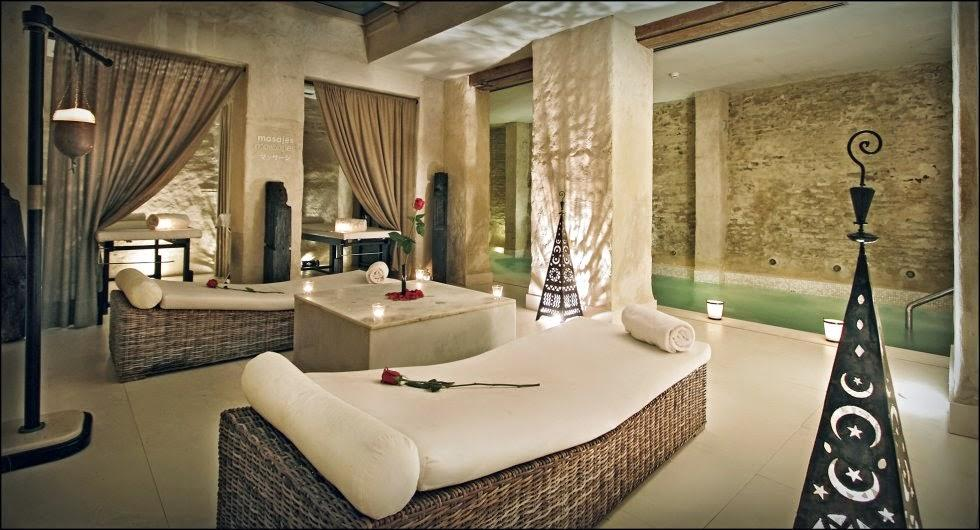
Spain’s larger resort spas often provide thermal circuits involving pools, steam rooms, saunas, hammams and hydrotherapy. When used appropriately, these spaces can extend the relaxation experience beyond the treatment room.
Anantara Villa Padierna is a particularly strong example. Its spa extends over more than 2,000 square metres and incorporates a hammam, Greek and Finnish saunas, aromatic steam facilities, heated pool, cold plunge and water-massage facilities.
Marbella Club takes a more Mediterranean approach through its dynamic seawater pool and thalassotherapy environment.
The result is a slower wellness journey.
Instead of arriving immediately before a massage and leaving immediately afterwards, guests can dedicate several hours to the experience. The transition itself becomes part of the appeal: changing clothes, entering the thermal area, slowing down, receiving the treatment and then resting rather than immediately returning to a busy itinerary.
For stress relief, that extra time may be as valuable as choosing between two similar massage techniques.
Massage, Mindfulness and Sleep
The most sophisticated wellness resorts in Spain increasingly recognise that massage alone cannot address every aspect of stress.
As a result, manual therapies are being integrated with meditation, mindfulness, yoga, nutrition and sleep-focused programmes.
Marbella Club’s current De-Stress & Unwind programme, for example, is designed around restoring balance to body and mind, while its Tranquility & Sleep Enhancing programme focuses more specifically on relaxation and sleep quality. Its programmes can incorporate personalised massages alongside other wellness activities.
This broader approach makes sense.
A massage can create a valuable period of relaxation, but the overall wellness experience becomes more substantial when guests also reconsider how they rest, move and structure their day.
For luxury travellers, this means that choosing a spa should involve more than comparing treatment menus. The environment surrounding the massage can be equally important.
A quiet resort, sufficient time, nourishing food, outdoor movement and an evening without an overloaded schedule can all support the same objective.
Choosing the Right Massage for Your Type of Stress
The best massage therapy for stress relief is therefore not universal.
For general mental fatigue and the desire to switch off, relaxation or aromatherapy massage is usually the most intuitive starting point.
When stress is concentrated around the upper body, a focused neck, shoulder and scalp treatment can make better use of the available treatment time.
For muscular tightness, deep-tissue or personalised therapeutic massage may be more appropriate, provided the pressure remains comfortable.
Hot stones introduce warmth and a more enveloping sensory experience, while traditional Thai massage suits guests who prefer stretching and movement.
Shiatsu offers another alternative for travellers interested in Japanese bodywork traditions, whereas thalassotherapy allows massage to become part of a distinctly Mediterranean water-based wellness experience.
Above all, guests should explain what they want to achieve before the treatment begins.
A short conversation about pressure, sensitive areas, recent physical activity and the desired outcome gives an experienced therapist considerably more information than simply requesting “a strong massage” or “something relaxing.”
Frequently Asked Questions
Which massage is best for stress relief?
A relaxation massage is a strong starting point for guests primarily seeking calm. Aromatherapy can add a sensory dimension, while personalised massage is particularly valuable when mental stress is accompanied by specific areas of muscular tension.
Is deep-tissue massage good for stress?
It can be useful when stress is associated with muscular tightness, particularly across the back and shoulders. However, stronger pressure is not inherently more relaxing, so guests seeking mainly mental relaxation may prefer a gentler treatment.
Which massage is best after a long flight to Spain?
A gentle personalised or relaxation massage can be an appealing option after travel, particularly when the treatment includes attention to the neck, shoulders and scalp. Guests with medical concerns after long-haul travel should seek appropriate medical advice rather than relying on massage.
Are there traditional Spanish massage therapies?
Spain’s luxury spa culture is highly international, so there is no single massage technique that defines the country. Coastal resorts do, however, make particularly strong use of thalassotherapy, Mediterranean seawater and locally inspired botanical ingredients.
Is aromatherapy massage good for relaxation?
It is commonly designed around relaxation, combining massage with aromatic oils and a multisensory environment. Marbella Club, for example, currently offers a dedicated stress-reducing ritual combining massage, aromatic oils, sound and scalp work.
Should I use the sauna before or after a massage?
This depends on the spa’s thermal protocol, the treatment and the guest’s individual circumstances. When using a full thermal circuit, it is best to follow the spa team’s recommended sequence rather than automatically combining prolonged heat exposure with massage.
How long should a stress-relief massage last?
There is no universal ideal duration. A shorter treatment can work well for focused neck and shoulder tension, while a longer session allows a therapist to combine full-body work with areas such as the scalp, face or feet. The appropriate duration depends on the technique and the guest’s objective.
By Luxury Magazine Editorial Team.